
The replay says the ball would have hit the stumps, yet the batter stays in. That can be the right decision: an LBW appeal depends on more than the projected path. For example, if a ball first lands outside the batter’s leg stump, it cannot produce an LBW under MCC Law 36, even if it would then have hit the wicket.
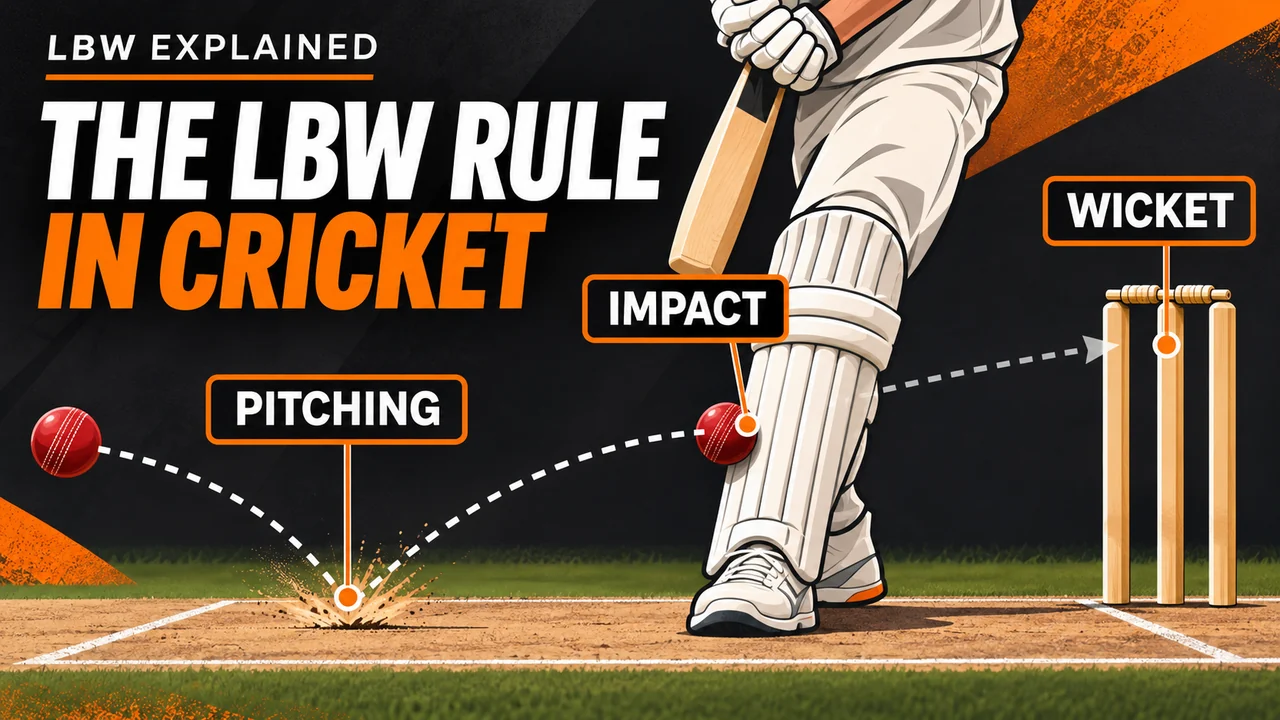
Start with the sequence below. It explains the MCC Laws in their 2026 edition; a particular competition’s playing conditions and review protocol still need to be checked before applying them to a match. Where the necessary view is missing, a spectator cannot settle a close appeal from the projection alone.
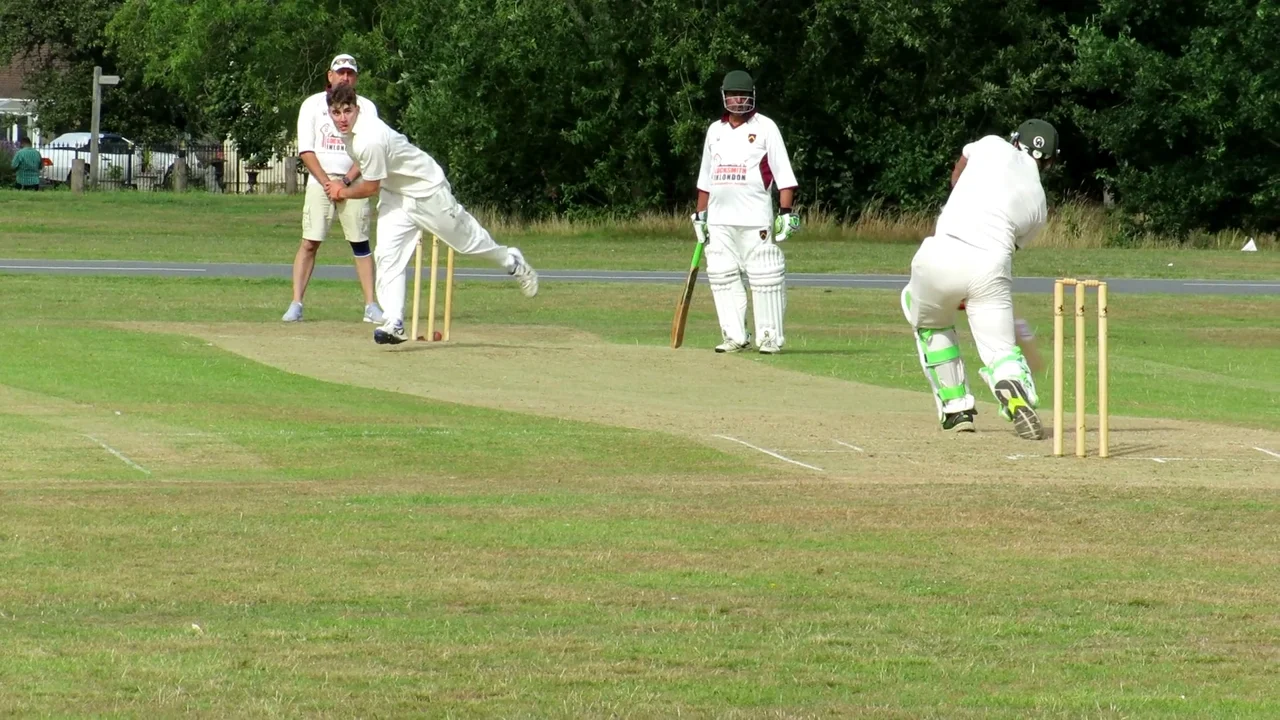
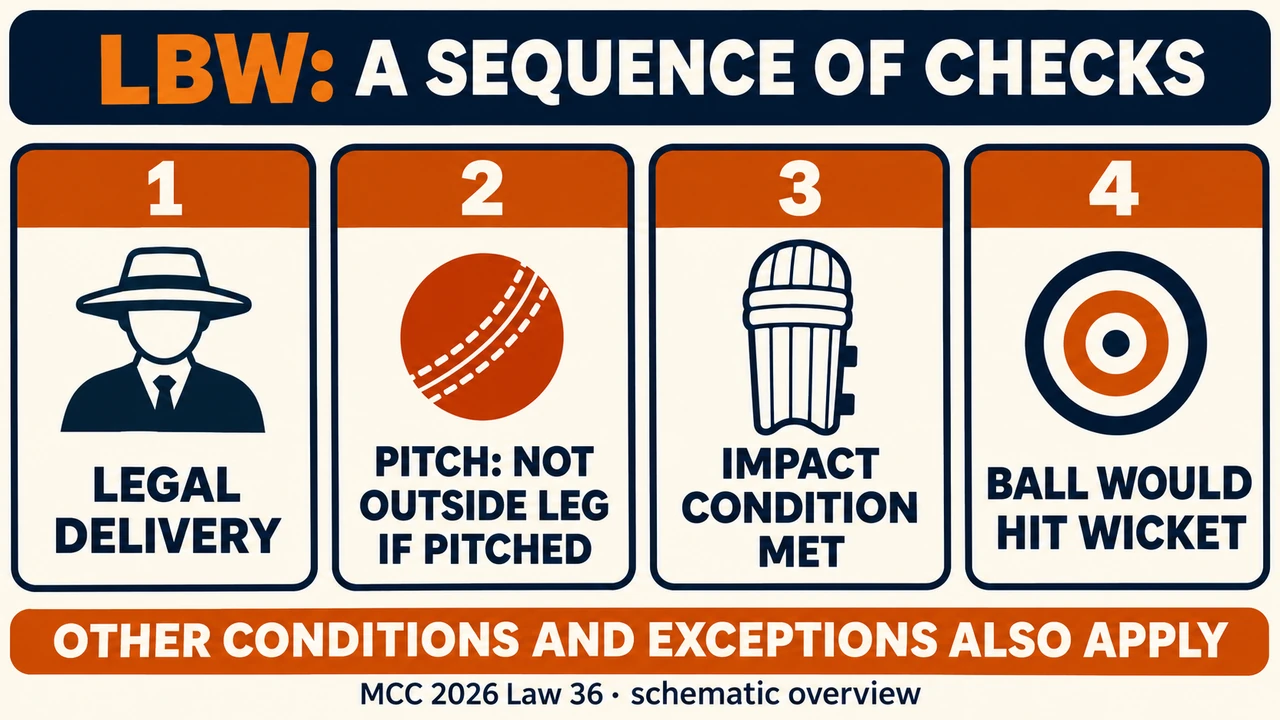
Five checks before an LBW decision
An umpire considers whether all the relevant conditions in MCC Law 36 are met. An umpire cannot give the batter out without an appeal; a batter who is out may still leave without one. This is a way to follow the question, not a substitute for the umpire’s judgement.
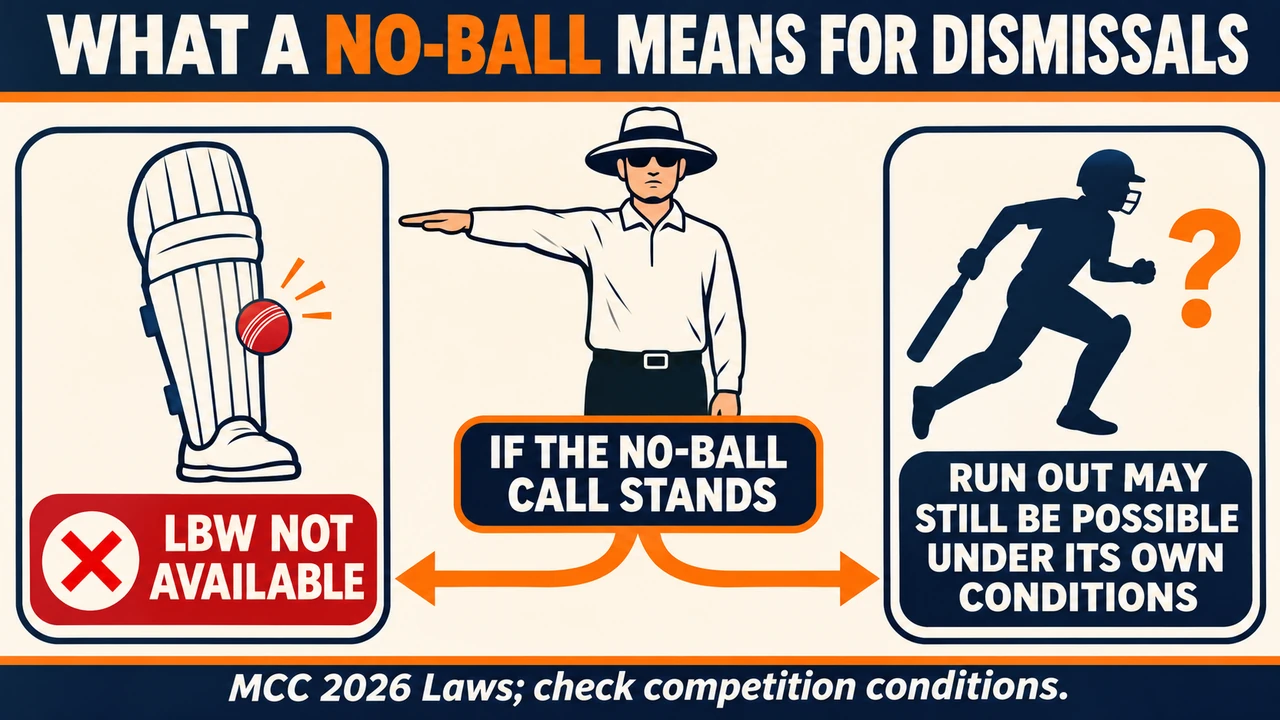
- Was it a no-ball? A batter cannot be out LBW from a no-ball.
- Where did it first land? If the ball bounced, it must first have landed in line with the wickets or on the batter’s off side. A ball intercepted before it lands does not have a pitching point to assess.
- Did the bat touch it first? For LBW, the ball must hit the batter’s person before touching the bat. A hand or glove holding the bat counts as the bat under Law 5.6. Simultaneous contact with bat and person is treated as bat first for the LBW test.
- Where was the first impact? Ordinarily it must be in line between the wickets. If the batter made no genuine attempt to play the ball with the bat, impact outside off can also qualify. Impact outside leg does not qualify.
- Would it have hit the wicket? The umpire must judge that the ball would have hit the wicket had the batter not intercepted it. A projection or replay can inform a review where the competition provides one, but it does not replace the other conditions.
For this delivery, the off side is fixed by the batter’s position when the ball comes into play; a later switch does not change it under MCC Law 36.3. A left-hander and right-hander normally face opposite directions, so do not copy the screen position of “outside leg” from one batter to the other without checking the relevant stance.
Landing and impact are different points
Imagine a right-handed batter facing a delivery that lands outside off stump and then moves inward. If it strikes the pad in line, without touching the bat first, and would have hit the wicket, an LBW decision can be possible. The fact that the ball landed outside off does not by itself rule it out.
Now change only the landing point: the ball lands outside leg, strikes the pad in line and appears to be heading for the stumps. Under the MCC Law, the outside-leg landing prevents LBW. The later impact and trajectory do not repair that earlier condition.
In both examples, assume the delivery is not a no-ball and the batter has not hit it first. A real appeal can involve uncertainty about contact, a no-ball, a shot or the trajectory, and the umpire must assess those facts too.
What changes when the batter offers no shot?
Suppose the ball lands outside off, misses the bat, hits the batter outside the off-stump line and would have gone on to hit the wicket. If the batter made a genuine attempt to play the ball with the bat, that outside-off impact prevents LBW. If there was no genuine attempt, the outside-off impact can satisfy the impact condition, provided the other conditions are also met.
“Can satisfy” matters here. No shot does not automatically mean out: the delivery must still satisfy the remaining Law 36 conditions. The umpire judges whether the attempt was genuine; a viewer may not have every angle needed to make that judgement.
Why a review may not change the on-field decision
Imagine a replay shows the ball pitching in line, hitting the batter in line and going on to hit the stumps. Is that enough for LBW? Not on its own. If the ball touched the bat before hitting the batter, or the no-ball call stands, the batter cannot be out LBW. If the replay does not show those checks, its three tracking results do not establish that every condition was met. The umpire must also consider the remaining conditions and the match’s applicable playing conditions.
Some competitions use the Decision Review System (DRS); others may use different arrangements or none. A review considers the relevant conditions and the available technology under that competition’s protocol. Depending on that protocol, a marginal measurement may be reported as “umpire’s call”, leaving the on-field decision in place. Check the competition and season before explaining the exact thresholds or how a review is counted. The ICC DRS overview points readers to the protocols in individual playing conditions.
Do not confuse the impact point—where the ball first intercepted the batter—with the wicket result—whether it would have gone on to hit the stumps. A review graphic may say “impact in line” and still show the ball missing the wicket: these are separate checks.
LBW questions readers often ask
Can a full toss be LBW?
Yes, it can be, if the delivery is not a no-ball and the other conditions are satisfied. Because the batter intercepts it before it lands, there is no initial landing point to test. A high full toss may be a no-ball under the applicable rules, so check that decision separately.
Is it LBW if the ball hits the pad before the bat?
Pad first can satisfy the contact part of the test, but it does not settle landing, impact or the path to the wicket. If contact with bat and person is simultaneous, the 2026 MCC Law treats it as bat first for this LBW test.
Does the ball have to hit the batter’s leg?
No. Despite the name “leg before wicket”, the Law refers to interception by the batter’s person; the relevant impact and trajectory conditions still apply.
Does a ball landing outside off automatically mean not out?
No. Landing outside off is allowed by the landing condition. The impact, contact, legality and projected path still have to satisfy their respective conditions.
If you are learning to follow a match, the IPL scorecard guide explains where the dismissal appears alongside the innings score. For an actual appeal, use the match’s own playing conditions and the umpire’s decision rather than treating an illustrative example as a replay.
For other match questions, the IPL Impact Player guide covers substitutions rather than dismissals, while the IPL 2026 season guide points readers toward tournament records and fixtures.