
Updated May 12, 2026: Better IPL odds research starts before the odds screen. Smart data tools can help a reader compare team news, venue patterns, player roles, and market movement, but they do not make a bet certain. This rewrite keeps the original search intent around Vegas11 smart data tools and rebuilds it as a risk-aware checklist.
The framework is the Data-to-Decision Ladder: context, signal, price, limit. Use context to understand the match, signal to decide what changed, price to judge whether the number still makes sense, and limit to keep the decision inside a pre-set plan.
No odds tool can remove cricket variance. A toss, injury, impact-player decision, slow pitch, short boundary, or one expensive over can change the story quickly. Treat data as a filter, not as a promise.
What Smart Data Tools Can Actually Help With
A useful IPL data screen does not tell you what to bet. It helps you ask better questions. Is the pitch helping spin? Did the batting side lose early wickets but still have finishers left? Is the death-over bowling unit under pressure? Did the price move because of confirmed news or because the market overreacted?
That distinction matters because many readers confuse more data with more certainty. The point is not to collect every number. The point is to identify which number changes the decision and which number is only background noise.
| Tool Or Signal | Helpful Use | Risk If Misread | Better Question |
|---|---|---|---|
| Live score and phase data | Shows whether the match is in powerplay, middle overs, or death overs. | A single over may look more important than the full innings context. | Is this phase normal for the venue and batting order? |
| Team news and XI changes | Confirms roles, bowling balance, and Impact Player options. | Unverified screenshots can create false urgency. | Can I confirm this from the match feed or a reliable source? |
| Venue and pitch notes | Explains scoring range, boundary size, and likely bowling matchups. | Old venue trends can be weak if conditions changed. | Does today’s surface match the old trend? |
| Odds movement | Shows how quickly the market reacted to news. | A moved price can be mistaken for a fresh opportunity. | Did the number move before I formed my view? |
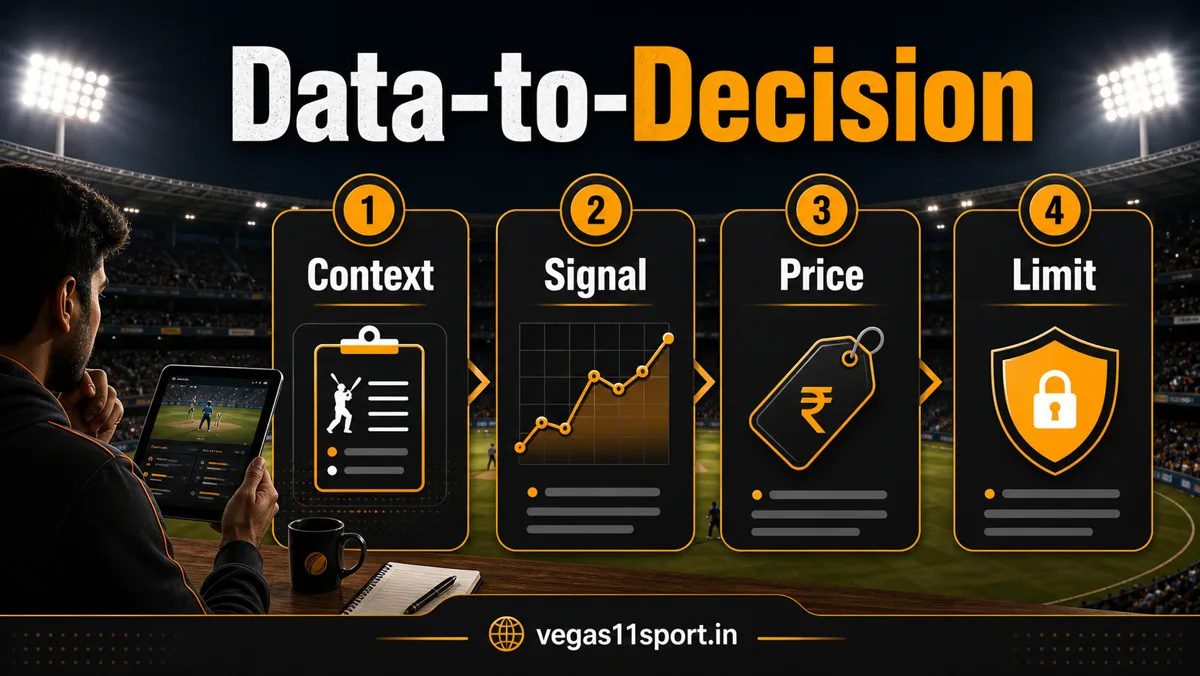
The Data-to-Decision Ladder
Start with context. Context means the cricket situation before the price. In an IPL match, context includes team balance, batting depth, bowling phases, venue behavior, weather, and whether the innings still has enough wickets or overs for a different story.
Then identify the signal. A signal is a piece of information that changes the view, not just information that looks interesting. Confirmed team news is a signal. A social post saying a side has momentum is not enough. A death-over pattern can be a signal only if today’s bowling roles match that pattern.
After that, look at price. A good cricket idea can still be a poor entry if the odds have already moved too far. Finally, check the limit. If the idea does not fit the amount you planned before the match, skip it even if the data looks neat.
| Ladder Step | Reader Task | Pass Condition | Stop Condition |
|---|---|---|---|
| Context | Read the match before the market. | Team, phase, venue, and role notes are clear. | The only reason is a highlight or chat message. |
| Signal | Find what changed. | The change is confirmed and relevant to the market. | The signal cannot be verified. |
| Price | Judge whether the market already reacted. | The number still fits the risk and reasoning. | The price moved while you were still checking basics. |
| Limit | Protect the session plan. | Stake fits a pre-set amount. | You need to add funds or chase a previous result. |
Why Odds Are Not Predictions
Odds are a market view, not a result forecast. They reflect probability, pricing, liquidity, user activity, and platform rules. A shorter price can mean a team is strongly favored, or it can mean the easy part of the opportunity has already disappeared. A longer price can be interesting, or it can simply show real risk.
That is why the safer habit is to write both sides of the decision. If you can explain only why a bet might work, you are not finished. You also need to explain what would make the idea wrong: a role mismatch, an injury, a slow pitch, a weak death-over plan, or a price that no longer leaves room.
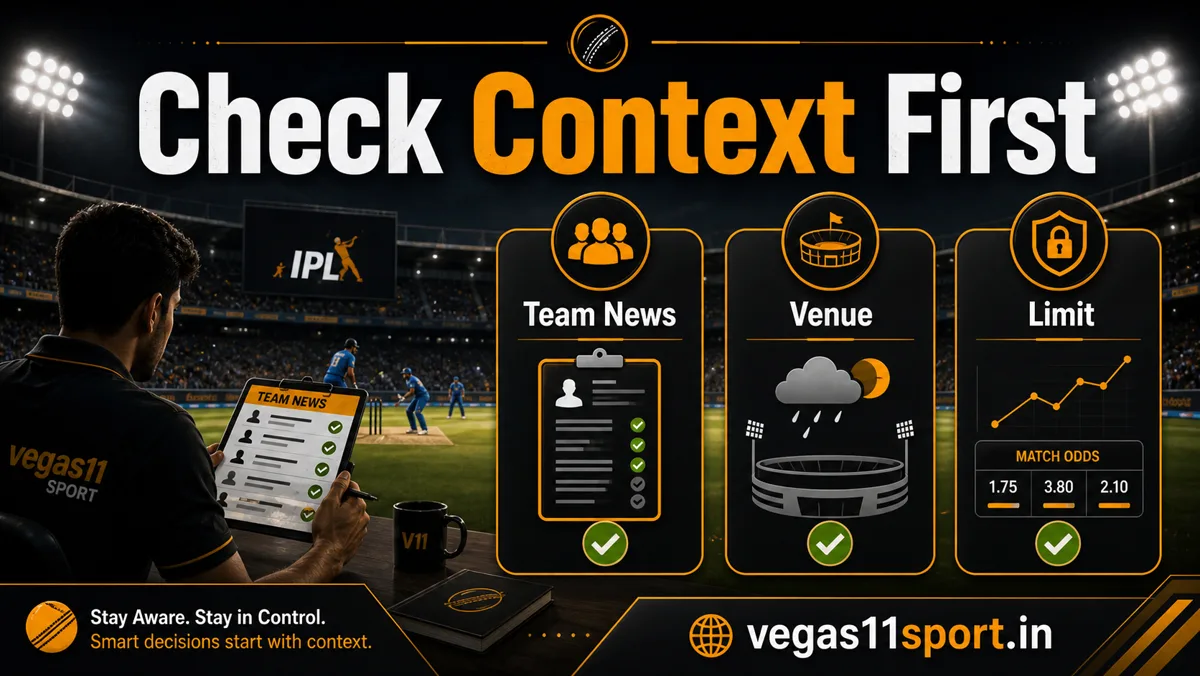
Common Mistakes When Using IPL Data
- Using stale data: last season’s venue trend may not match today’s surface or squad.
- Reading charts without cricket context: a line movement matters only when you know why it moved.
- Following public momentum: a popular view can already be priced in.
- Ignoring market rules: settlement, suspension, void rules, and maximum stakes need checking first.
- Letting data justify a chase: a second bet after a loss should not be disguised as analysis.
| Before Using A Data Signal | Ask This | Reason |
|---|---|---|
| Source | Where did this data come from? | Unclear data should not drive money decisions. |
| Timing | Is it current enough for this match phase? | IPL live conditions can change within minutes. |
| Market fit | Does the data match the exact market label? | Team data may not apply to a player or over-specific market. |
| Budget fit | Does this fit the session limit? | Good analysis still needs a stopping point. |
A Personal View: Data Should Slow You Down
A useful smart tool should not only create speed. It should create friction. A good screen gives you enough information to pause, check the source, and decide whether the idea still makes sense after the excitement drops.
For Vegas11 Sport readers, that is the editorial standard: data should turn a reaction into a review. If a tool only makes you feel more urgent, step back and reduce the decision. The match will keep moving, but you do not need to turn every signal into a stake.
FAQ
Can smart data tools help find better IPL odds?
They can help readers compare context, signals, and price movement, but they cannot make an outcome certain. Use them as a checklist, not as a prediction system.
What is the first data point to check before IPL odds?
Start with team context: playing XI, roles, venue, innings phase, and confirmed news. Price should come after those checks, not before.
Should I follow odds movement during live IPL matches?
Odds movement can be useful, but only if you understand why it moved. If the number changed before you verified the reason, waiting may be the cleaner decision.
Related Reading
- How to Read IPL Betting Odds
- IPL Futures Betting Guide
- IPL Team Analysis and Squad Breakdown
- Smart IPL Controls Checklist
Vegas11 Sport may include commercial references or affiliate links. Read the Affiliate Disclosure, Review Methodology, Responsible Gaming, and Corrections Policy pages before using betting-related information. Odds, account tools, market rules, and promotion terms can change. Check live terms before you act.
Source and update note: This guide was refreshed on May 12, 2026 using same-intent responsible-use guidance from NCPG, GambleAware, and public IPL context from IPL. Data screens, market labels, and odds can change quickly. Verify current terms and match information before acting.