

Updated June 20, 2026: this IPL 2026 futures betting guide has been rebuilt around the original search intent: how to identify early value teams before the market fully adjusts. RCB’s title run and Gujarat Titans’ push to the final are useful examples, but the goal is not to chase yesterday’s result. The goal is to understand which signals deserved attention before prices moved.
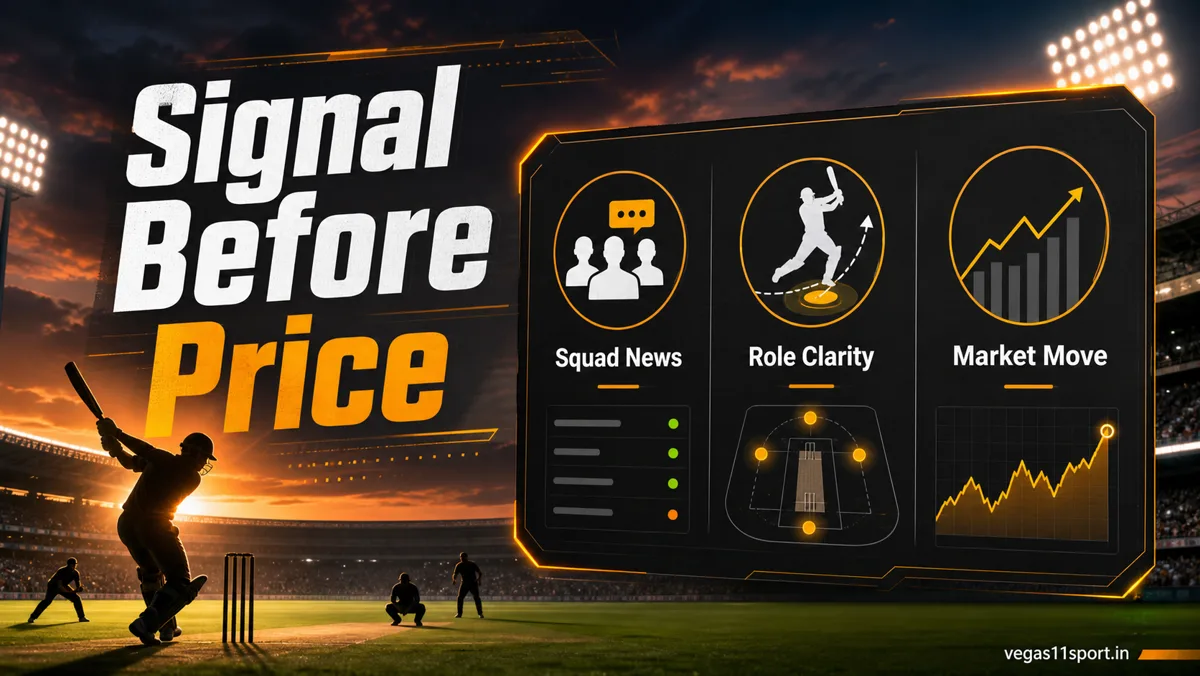
My working rule for IPL futures is simple: never start with the odds screen. Start with the news. Then ask whether that news changes a team’s role clarity, squad balance, schedule path, or pressure profile. Only after that should the price matter.
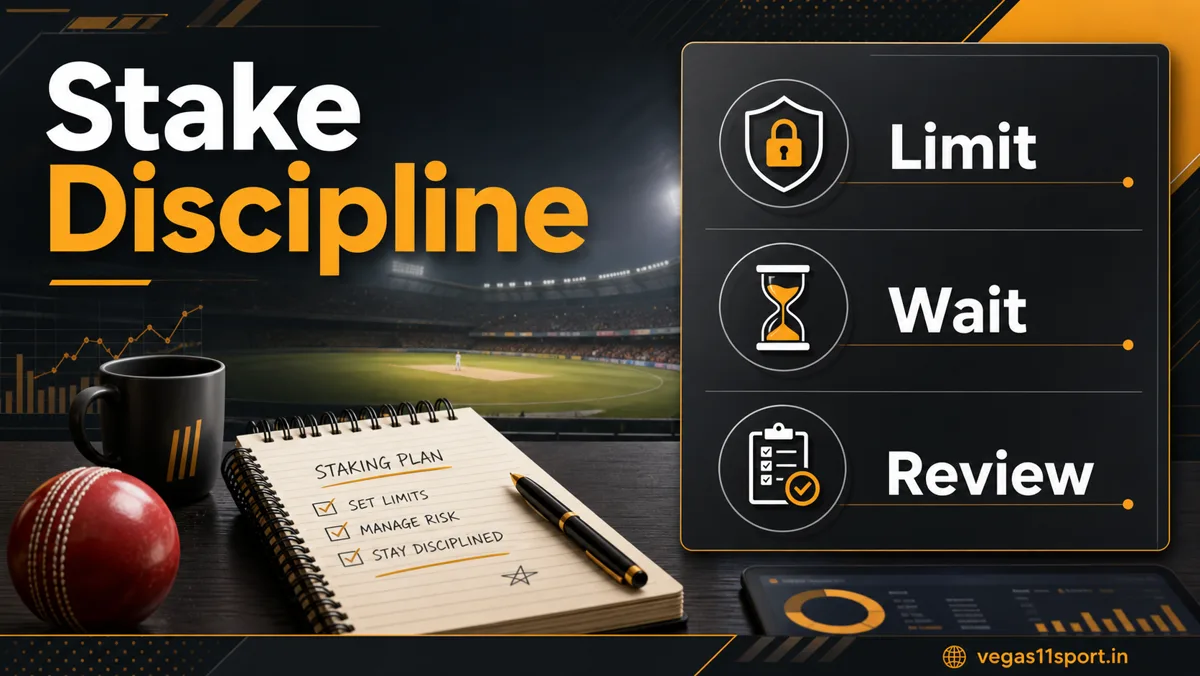
This is a high-variance market. Futures bets can tie up money for weeks or months, and no team profile removes the chance of injuries, selection changes, weather, poor form, or a bad playoff matchup. If you choose to bet, set a limit before you open the market and keep the Responsible Gaming page close.
The Search Intent: Finding Early Value, Not Naming a Winner
Most readers who search for IPL 2026 futures betting or early value teams are not asking for a simple champion pick. They want a process. They want to know which teams may be misread by the market, which news items matter, and how to avoid reacting too late after the price has already moved.
That distinction matters. A futures article that only says “Team A looks strong” is weak. A better guide shows the reader how to judge the next headline: an auction move, an injury return, a captaincy change, a venue shift, or a playoff qualification path.
My News-to-Number Filter for IPL Futures
The Vegas11 Sport filter I use is News to Role to Price. A headline only becomes useful when it changes a cricket role. A role only becomes useful when the market has not already priced it in. That is the whole framework.
For example, RCB’s 2026 season was not only about a final chase. The stronger lesson is that their squad had multiple ways to win: powerplay scoring, middle-over stability, bowling pressure, and senior players who could slow a tense chase down. Those traits were visible before the final if you watched roles instead of only scorecards.
| Filter Step | Question To Ask | Why It Matters |
|---|---|---|
| News | What changed: squad, injury, captaincy, role, schedule, venue, or form? | Futures prices often react when public news becomes obvious. |
| Role | Does the news solve a real cricket problem for the team? | A headline is useful only if it improves the XI or match plan. |
| Price | Has the market already adjusted too far? | A strong team can still be a poor futures entry if the price is already short. |
| Patience | Can you wait if the number no longer has a margin? | Skipping a thin price is part of responsible futures analysis. |

What Counts as an Early Value Team?
An early value team is not automatically an underdog. It is a team where the available price appears slower than the cricket evidence. Sometimes that is a contender with a clearer path than the market admits. Sometimes it is a mid-table side that fixed one specific weakness. Sometimes it is a favorite that still has a fair number because the public is focused on a louder storyline elsewhere.
I separate teams into four profiles before I even think about stake size. This keeps the article grounded in search intent: readers are trying to compare teams, not memorize one pick.
| Team Profile | Early Value Signal | Danger Sign |
|---|---|---|
| Stable core | Captain, top order, death bowling, and Impact Player plan already look settled. | The price may already be too short if everyone sees the same stability. |
| Role-fix team | Auction or selection news solved one clear weakness from the previous season. | The new player has no obvious XI slot or creates balance problems. |
| Bowling-depth team | The side has wicket options across powerplay, middle overs, and death overs. | One injury could force the same bowler to cover every difficult phase. |
| Market-overreaction team | A poor finish or noisy loss hides a squad that still has repeatable strengths. | The weakness was structural, not just one bad match. |
RCB and Gujarat Are Useful Case Studies
RCB’s 2026 title defense is a good case study because it shows how early value can come from role clarity. Their playoff run included both an explosive Qualifier 1 and a more controlled final chase. A futures reader should notice that range. Teams with more than one winning pattern are easier to trust than teams that need the same perfect match script every time.
Gujarat Titans are useful in a different way. GT reached the final and had strong batting headlines, including Shubman Gill’s Qualifier 2 century, but the final exposed how quickly pressure can move from a top-order story to a middle-order question. That does not make Gujarat a poor team. It shows why early futures analysis must include “what can go wrong if Plan A stalls?”
The personal viewpoint here is not that one of those teams was the only correct futures idea. It is that both teams reveal the same lesson: value is usually found where news changes the role map before the market fully agrees.
How to Compare Futures Prices Without Overreacting
Futures odds express a market view of a future event. They can be useful, but they are not proof. A shorter price may mean the team is stronger, or it may mean the easy part of the idea is already gone. A longer price may mean hidden upside, or it may mean the market sees a real weakness.
Before treating any IPL 2026 futures price as attractive, write one sentence for each side: why the team could improve from here, and why the market might already be right. If you cannot write the second sentence, you are probably reading the bet like a fan instead of an analyst.
| Checkpoint | Useful Answer | Walk-Away Answer |
|---|---|---|
| Cricket reason | A specific role, venue pattern, or squad change improves the team. | The case is mainly hype, memory, or social media momentum. |
| Price reason | The number still leaves margin after the news is considered. | The price moved before you formed your view. |
| Risk reason | You know which injury, matchup, or selection change would weaken the case. | You only have a positive scenario. |
| Stake reason | The stake is small enough that a long wait does not pressure you. | You would feel pushed to add more after one loss. |
Common Mistakes in IPL Futures Betting
- Entering after the move: if the price already reacted to public news, the margin may be gone.
- Confusing a good team with a good number: strong teams can still be poor entries if the price is too short.
- Ignoring lock-up time: futures markets can hold your stake for a long period.
- Skipping rules: settlement rules, void rules, dead-heat rules, and market labels need to be checked before staking.
- Forgetting the downside case: every futures note should include the news that would make you step back.
How Vegas11 Readers Can Use This Guide
Use this article as a pre-market checklist. Start with IPL news, translate that news into a role change, compare the role change with the price, and only then decide whether the market still deserves attention. If the idea needs perfect luck, constant adding, or a story you cannot verify, let it pass.
Vegas11 Sport may include commercial links or platform references. Read the Affiliate Disclosure for relationship context and the Review Methodology for how we evaluate betting-related pages. For limits and control reminders, use Responsible Gaming. If you spot a factual issue, the Corrections Policy explains how updates are handled.
FAQ
What is early value in IPL futures betting?
Early value is when your evidence-based view of a team’s chance is stronger than the market price suggests. It should come from squad news, role clarity, schedule context, or tactical fit, not only from liking a team.
Should I bet IPL futures before the season starts?
Only if the cricket reason, price reason, and risk reason all make sense. Early timing alone is not enough, and futures bets can tie up money for a long time.
Which IPL teams are early value teams?
The answer changes with news and price. Instead of locking onto one name, compare stable-core teams, role-fix teams, bowling-depth teams, and market-overreaction teams using the filter above.
Related Reading
- How to Read IPL Betting Odds
- IPL 2026 Auction Review: Moves That Shaped RCB, KKR and the Final Race
- IPL 2026 Team Analysis and Squad Breakdown
- IPL 2026 Season Outlook
Source and update note: This guide was checked on June 20, 2026 against current public IPL 2026 reporting and same-intent betting education sources, including Economic Times final coverage, Times of India playoff coverage, and a futures betting explainer. Market prices, squads, injuries, and settlement rules can change, so readers should verify live terms before acting.