
The scoreboard rises, but the batter’s individual score stays the same. That can happen when the batting side receives an extra. Wides, no-balls, byes and leg-byes all add to the team total, yet the bowler is not charged with every type in the same way.
The practical question is not only “how many runs were added?” It is also “where were they recorded?” The examples here use the MCC Laws, 2026 edition. Check the actual match’s playing conditions and scorecard if they amend or display the rules differently.
Four common kinds of extras
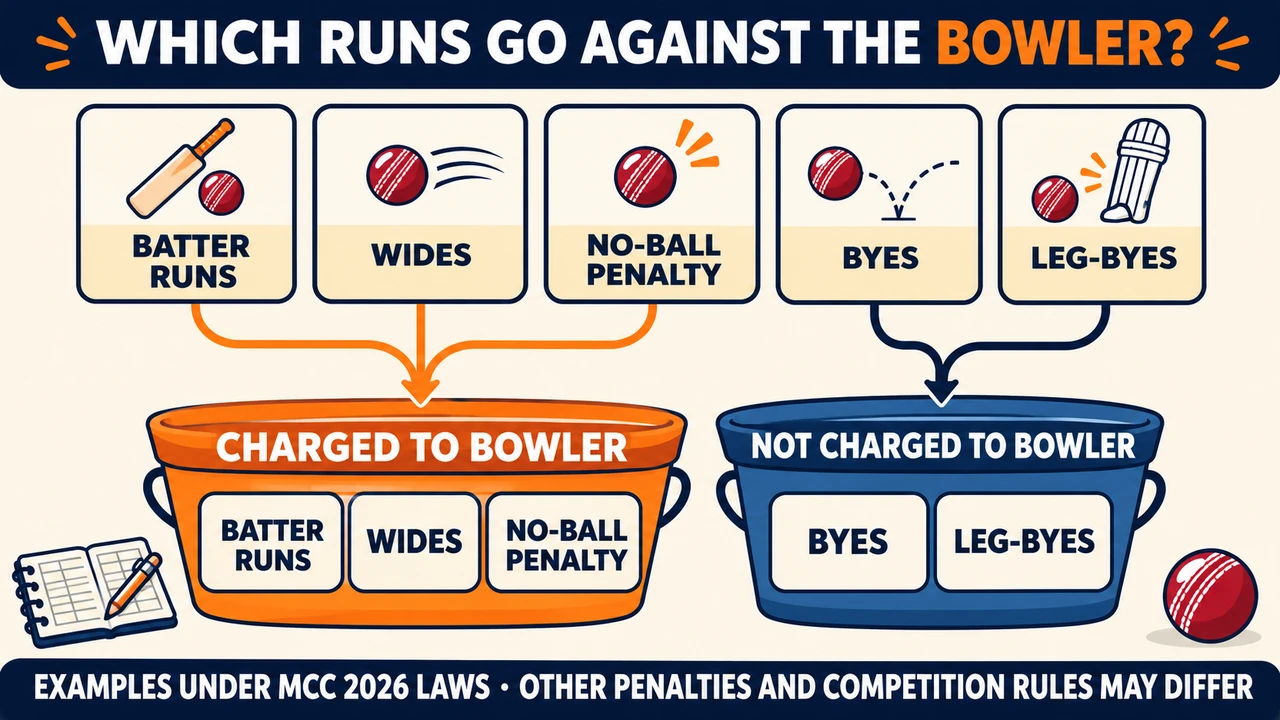
- Wide: The umpire calls a wide under the applicable Law. Wide runs go to the team as extras and are normally debited to the bowler. A wide does not count as a valid ball in the over.
- No-ball: Unless the call is revoked, the one-run no-ball penalty is a team extra and is debited to the bowler. The delivery does not count as a valid ball of the over. Runs from the bat are credited to the striker in addition to that penalty.
- Bye: If a delivery that is not a wide passes the striker without touching bat or person, completed runs or an applicable boundary allowance are byes. A no-ball can still also carry its separate one-run penalty. Byes add to the team total but are not debited to the bowler under Law 18.10.
- Leg-bye: If the ball first strikes the striker’s person, completed runs or a boundary allowance can be leg-byes when the Law’s conditions are met; a later bat contact can change the credit. They are team extras and are not debited to the bowler under Law 18.10. Leg-byes have additional conditions; for example, the umpire must be satisfied that the striker attempted to play the ball or tried to avoid being hit.
Those short descriptions do not settle every unusual delivery. Calls can be revoked, runs can be disallowed, and penalty runs have their own rules. Use the umpire’s decision and the applicable Laws for the actual event.
A ten-run reconciliation
Imagine a small passage of play with these recorded entries. The entries describe separate deliveries except where stated; no wickets or additional penalties occur.
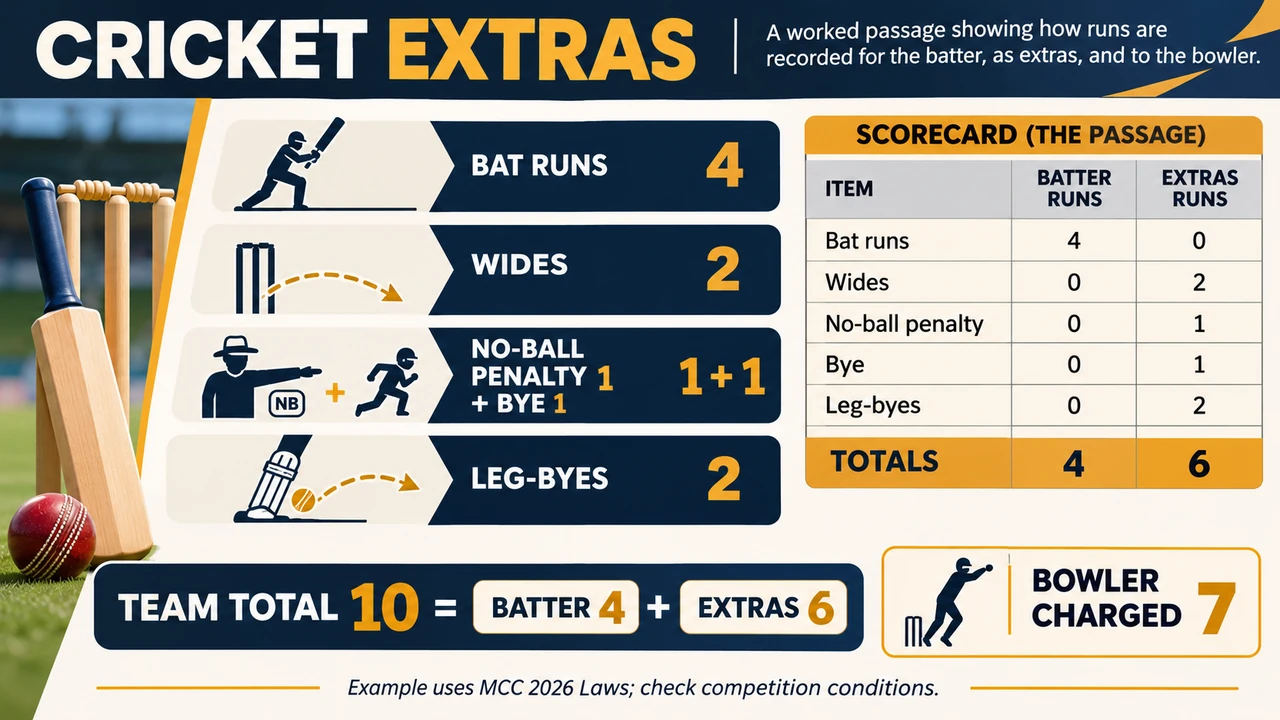
- A batter scores four runs from the bat: team +4, batter +4, bowler debit +4.
- A wide earns two wides in total: team +2, batter +0, bowler debit +2.
- A no-ball call stands; without the ball touching bat or person, the batters complete one bye: team +2, batter +0, bowler debit +1.
- The batters complete two eligible leg-byes on another delivery: team +2, batter +0, bowler debit +0.
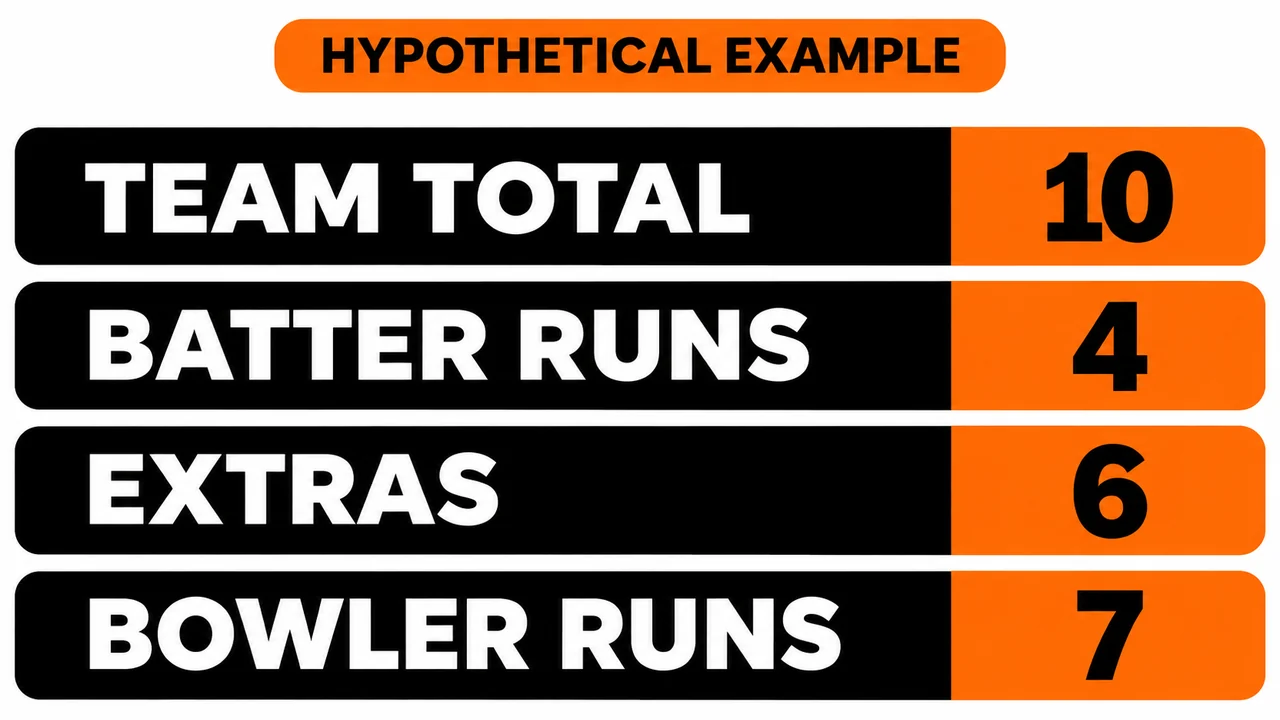
The team gained 10 runs: four credited to the batter and six recorded as extras. The bowler’s debit rose by seven: four batter runs, two wides and the one-run no-ball penalty. The bye and two leg-byes make up the remaining three team runs.
The 2026 MCC edition explicitly records eligible byes or leg-byes separately from the one-run no-ball penalty. Older scorecards and other competitions may use different conditions or displays, so identify the edition and competition before applying this example to a historical match.
What an extra does to the ball count
A wide and a no-ball do not count as valid balls in the over under the cited Laws. Eligible byes and leg-byes can occur on a valid delivery; the fact that a run is an extra does not by itself mean the ball must be bowled again. If a bye or leg-bye occurs on a no-ball, the no-ball call is the reason that delivery does not count.
An umpire’s call can later be revoked in specified circumstances. When a live display changes, rely on the corrected official record rather than assuming the first animation or social post was final.
Reading the scorecard without double-counting
Start with the batting side’s total. Compare it with the combined scores of all batters in that innings plus the extras line, including any penalty runs credited to that innings. If the figures do not reconcile, check whether the innings is complete, whether the display has refreshed and whether penalty runs or a correction are shown. The team total and a bowler’s runs conceded answer different questions; adding the bowler’s figures to the team total would count runs twice.
The IPL scorecard guide explains how the innings total, overs, wickets and partnerships fit together. For a broader look at comparing player figures, the cricket data tables guide discusses samples and definitions. The IPL season guide points readers toward official competition records.
Extras FAQ
Do extras count towards a batter’s score?
The extras themselves are credited to the team, not an individual batter. A batter can still score runs from the bat on a no-ball; those batting runs and the no-ball penalty are recorded separately.
Are all extras charged to the bowler?
No. Under MCC Law 18.10, the bowler is debited with runs scored by the striker, no-ball extras and wides. Byes and leg-byes are not included in that debit. Check separate penalty rules and competition conditions for unusual cases.
Can a no-ball also produce byes?
Yes. Under the 2026 MCC wording, the one-run no-ball penalty is recorded as a no-ball extra, while eligible additional runs can be recorded as byes or leg-byes as appropriate. Historical or competition-specific rules can differ.
Do byes mean the batter was out?
No. A bye is a scoring category, not a dismissal. The Laws and the umpire’s decision determine what happens on the particular delivery.
Why does a wide sometimes add more than one run?
The wide penalty is one run; any eligible runs completed or boundary allowance resulting from the wide are scored as wides as well. The actual call and score are for the officials to determine.