
A ball passing outside a painted line is not, by itself, a complete explanation of a wide call. The umpire considers the delivery, the striker’s position and movement, and the playing conditions for the match.
The 2026 MCC Laws set out the general rule. Competition conditions can add different instructions: the ICC separately described a wide-ball change for ODIs and T20Is from October 2026. Start by identifying which rules apply before comparing two decisions.
The general reach test
Under MCC Law 22.1, subject to the law’s conditions, a delivery that is not a no-ball is judged wide if it passes wide of where the striker is standing or has stood after the ball came into play for that delivery, and would also have passed wide of a striker in a normal batting position.
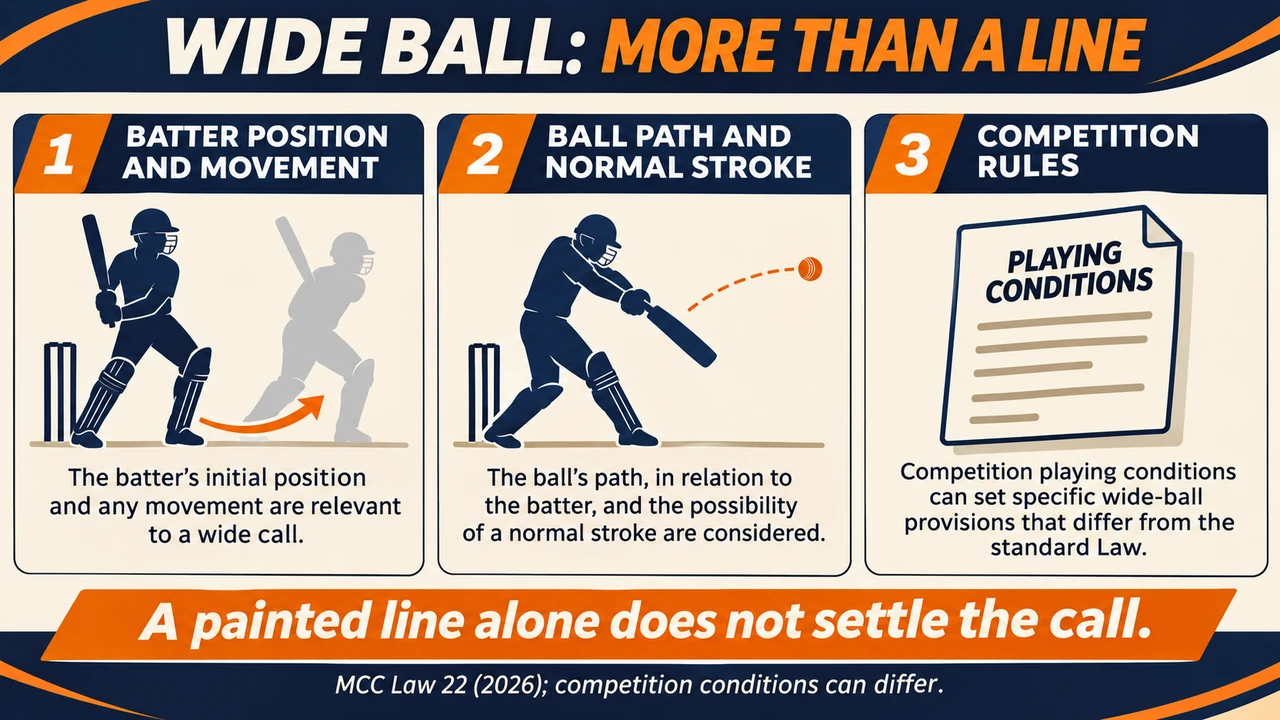
For the reach test, the Law asks whether the striker can reach the ball to hit it with the bat using a normal cricket stroke. The Law also treats a delivery as passing wide if, after landing, it passes above the head height of a striker standing upright at the popping crease, subject to the other applicable calls and conditions. These are legal tests for the umpire, not distances a viewer can reliably measure from one camera angle.
Movement can change the judgement
Law 22.4 says a delivery is not adjudged wide if the striker’s movement causes it to pass wide, or brings it sufficiently within reach to hit with a normal stroke. A batter moving across the crease can therefore matter, but movement by itself does not establish the call.
The question is not merely where the batter finishes. The umpire must apply the full relevant wording to where the striker stood and to the path of the ball. Without those facts, a replay showing only the final position cannot settle the decision.
ICC ODI and T20I conditions may differ
In its October 2026 announcement, the ICC said an initially trialled wide-ball rule had been permanently added to its ODI and T20I playing conditions. Its explanation refers to the position of the batter’s legs at delivery as a reference when the batter subsequently moves across to the off side.
That summary is not a substitute for the full playing conditions or a decision on a particular ball. The ICC said its changes applied to international series starting on or after 1 October 2026, with ongoing series continuing under their previous regulations. The announcement does not establish an IPL season’s rule. Check the competition, format, edition and start date.
Contact, no-balls and the scorecard
Under the MCC law, contact with the striker’s bat or person as the ball passes the striker prevents a wide judgement. If a wide has already been called, the umpire revokes it when the ball contacts the striker’s bat or person before it contacts a fielder. A no-ball call also overrides a wide call.
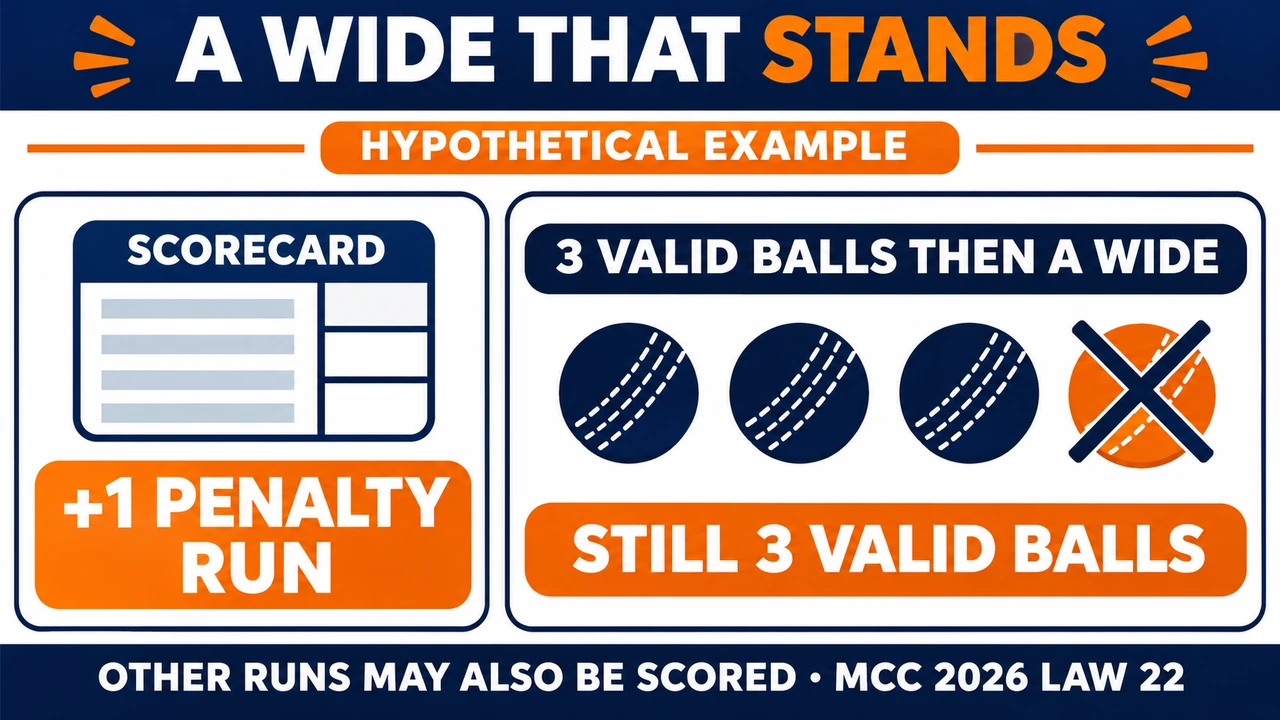
Under that law a wide does not count as one of the over, but the ball does not become dead merely because wide is called. A one-run penalty is awarded unless the call is revoked, and other runs can be scored. These consequences are different from the initial judgement of whether the ball is wide.
For the surrounding scorecard, see the site’s IPL scorecard guide and required run-rate guide. The responsible gaming page provides information on personal limits and support.
Wide Ball FAQ
Is every ball outside the painted line a wide?
Not automatically. The umpire applies the match’s relevant laws and conditions, including the striker’s position and movement. A line alone does not establish the final call.
Does a wide count as a legal ball in the over?
Under MCC Law 22, a wide does not count as one of the over. The ball can remain in play and other runs may still be scored.
What happens if the ball touches the bat?
The MCC law says a delivery is not adjudged wide if it touches the striker’s bat or person as it passes them, and specifies when a wide call is revoked after contact. Check the full law and match conditions for the incident.
Does the ICC’s October 2026 wide-ball change automatically apply to the IPL?
No. The ICC announcement concerns its international ODI and T20I playing conditions. Check the IPL season’s own conditions and the match circumstances before applying a position or reach test.