
Updated June 1, 2026: IPL data analytics is useful only when it slows the reader down. The original topic promised hidden answers from data. This rewrite keeps the search intent around Vegas11 Sport data tools, but reframes the article around a cleaner question: which signals deserve attention, and which signals need more context before they influence a betting view?
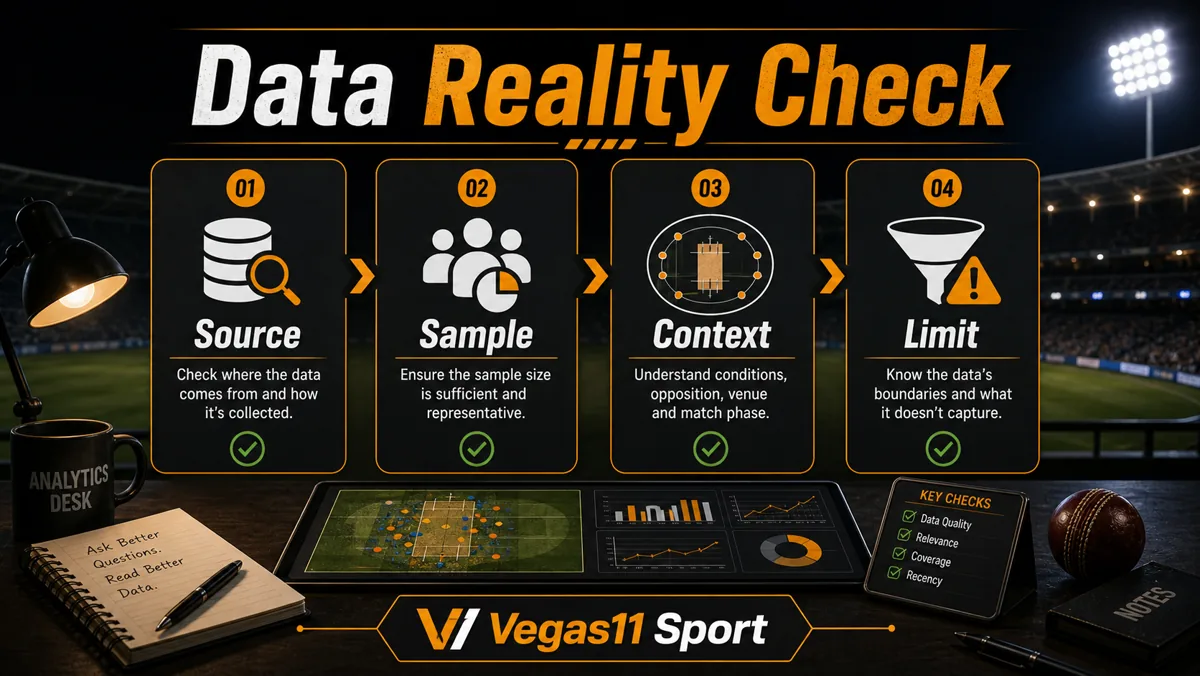
My framework is the Data Reality Check: source, sample, context, and limit. A chart can show what happened, but it cannot remove cricket uncertainty. A reader still needs to know where the data came from, how large the sample is, what changed in the match, and where the data stops being useful.
This guide is for adult readers who already follow IPL betting information. It is not a prediction system. It is a practical way to read analytics without turning every chart into a rushed market decision.
The Direct Answer: Data Should Create Questions First
The most useful IPL data does not tell a reader what to do. It helps the reader ask cleaner questions. Is this trend from a reliable source? Is the sample large enough? Does the venue match the old pattern? Did the playing XI change the role that the chart is measuring?
Those questions matter because data can look precise even when the match situation is messy. Strike rate, economy rate, fielding value, phase scoring, and venue history all need cricket context. A number without context can create confidence that the evidence does not deserve.
| Data Signal | Useful Reading | What Can Go Wrong | Reader Check |
|---|---|---|---|
| Player form | Shows recent role and rhythm across matches. | A small sample can hide opposition strength or venue effects. | Check whether the role and conditions match the next match. |
| Venue pattern | Helps explain run range, boundary size, and bowling style. | Old venue data may not match a fresh surface. | Look for current pitch and weather context. |
| Phase data | Separates powerplay, middle overs, and death overs. | One phase can be overvalued after a dramatic over. | Ask whether the trend repeats beyond one innings. |
| Market movement | Shows how quickly public views react. | A moved price can feel like an instruction. | Check why it moved before deciding whether it matters. |
How The Data Reality Check Works
Start with source. A reader should know whether the information comes from an official match feed, a scorecard, a team announcement, a reputable cricket report, or an unclear social post. The same number has a different value depending on where it came from and how recently it was checked.
Then look at sample. A player can have one strong match without changing the full evaluation. A bowler can have one poor over without losing the role. A batter can look excellent against one type of bowling and ordinary against another. Sample size keeps the reader from overreacting to one memorable moment.
Context is the third step. IPL conditions change quickly: toss, dew, boundary size, Impact Player options, batting depth, injury news, and match phase can all change what the same number means. A statistic that matters before the toss may matter less after the XI is confirmed.
| Check | Ask This | Pass Signal | Stop Signal |
|---|---|---|---|
| Source | Can I verify where this data came from? | The source is current and identifiable. | The data comes from a cropped image or vague post. |
| Sample | Is the sample broad enough for this claim? | Several relevant matches or phases support the pattern. | One highlight is doing all the work. |
| Context | Does the match situation still match the data? | XI, venue, phase, and role are aligned. | Conditions changed but the old trend is still being used. |
| Limit | What does this data not capture? | The reader can name the uncertainty. | The chart is treated as a conclusion. |
Where Analytics Can Mislead IPL Readers
Analytics can mislead when it looks more certain than cricket really is. A clean dashboard may hide the fact that the next over includes a different bowler, a changed field, a left-right matchup, or a batter moving from rebuild mode to attack mode. The visual may be neat; the match is still alive.
A second risk is confirmation bias. Readers often look for data that supports the view they already like. If a number agrees with the feeling, it gets accepted quickly. If it disagrees, it gets ignored. The Data Reality Check forces both sides to be visible.
A Personal View: Data Is A Filter, Not A Finish Line
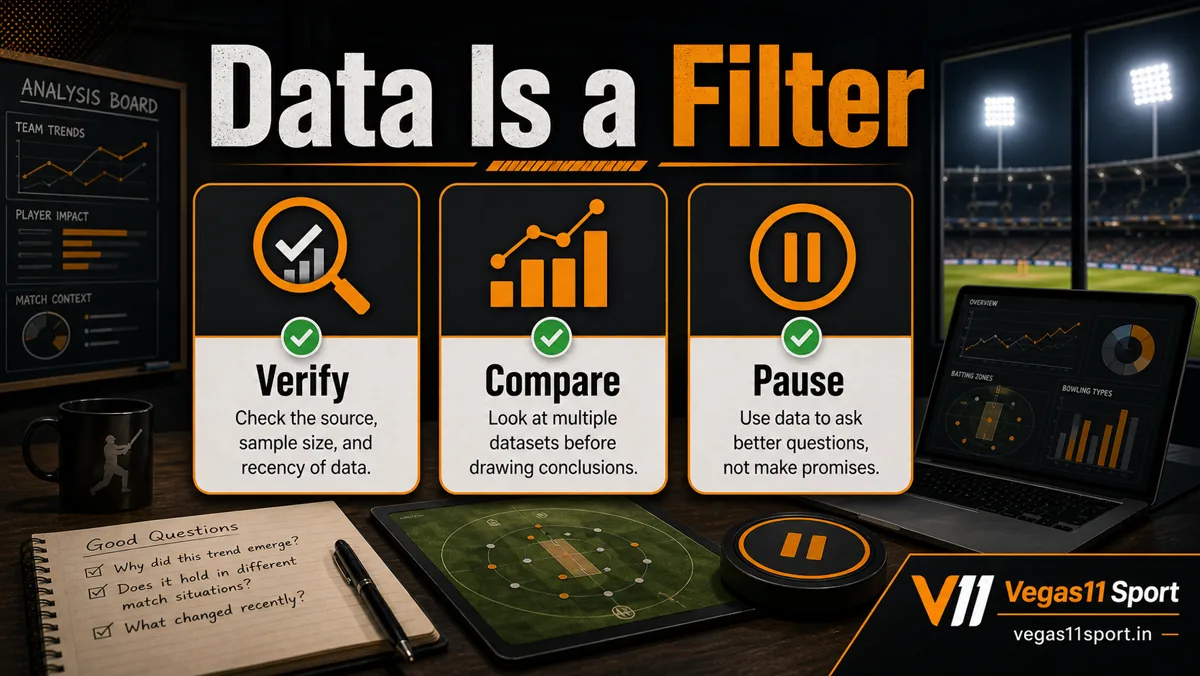
My view is that data is most useful when it makes the reader less dramatic. The right chart should help someone say, “I need to check one more thing,” rather than “I found the answer.” That small pause is valuable in IPL because the market, scoreboard, and group chat can all push for speed.
For Vegas11 Sport readers, the habit I would keep is simple: use data to filter weak ideas out. Do not use it to force a decision in. If the source, sample, context, or limit is unclear, the cleaner choice is to wait.
| Reader Scenario | Better Response | Why It Helps |
|---|---|---|
| A chart shows a strong recent trend. | Check sample size, opposition, venue, and current role. | It keeps one trend from becoming the whole argument. |
| A live price moves quickly. | Ask what confirmed information caused the move. | It separates news from public reaction. |
| A model shows a strong lean. | Read the inputs and missing factors before reacting. | It prevents model language from becoming certainty. |
| A tip uses impressive data words. | Look for source, date, and direct match relevance. | It removes weak evidence dressed as analysis. |
FAQ
Can IPL data analytics improve betting decisions?
Analytics can improve the questions a reader asks, but it cannot make a match result certain. Use it to check source, sample, context, and limits before making any decision.
What IPL data should readers check first?
Start with current team context: playing XI, player role, venue, match phase, and confirmed news. Historical numbers should come after those checks, not before them.
Should live data be trusted during IPL matches?
Live data can be useful, but it needs timing and market-rule awareness. If the number moved before you verified the reason, waiting is often the cleaner response.
Source and update note: This article was refreshed on June 1, 2026 using public IPL context from IPL, responsible-use guidance from NCPG, and safer-gambling guidance from GambleAware. Data feeds, market labels, and match information can change. Check current terms and verified sources before acting.
Related Reading
Vegas11 Sport may include commercial references or affiliate links. Read the Affiliate Disclosure, Review Methodology, Responsible Gaming, and Corrections Policy pages before using betting-related information. Odds, account tools, market rules, promotion terms, and cricket news can change. Check live terms and current match information before you act.