
Updated June 5, 2026: IPL player milestones can shape fan conversation, media coverage, and market attention. But a milestone by itself is not enough. A reader still needs role context, venue context, market rules, and a clear limit before treating a milestone story as useful betting information.
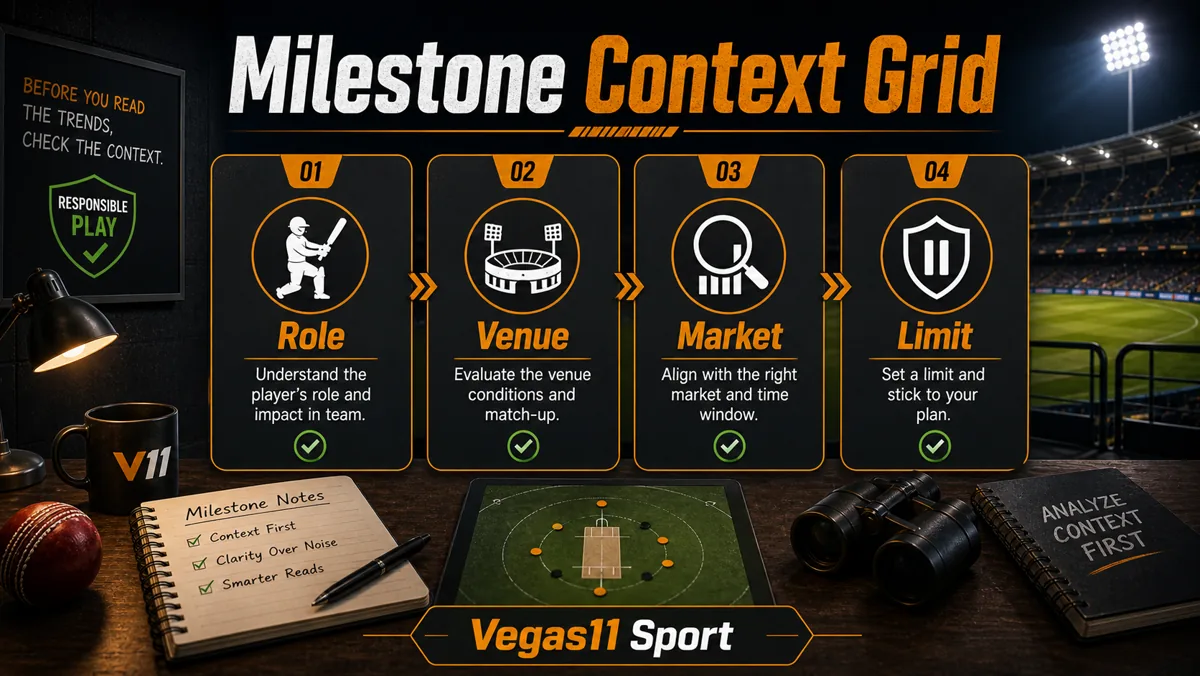
My framework is the Milestone Context Grid: role, venue, market, and limit. A batting landmark, bowling record, or all-round contribution should be read through those four lenses. Otherwise, the article becomes a list of exciting events rather than a tool for calmer interpretation.
This rewrite keeps the original search intent around player milestones and betting trends, while removing exaggerated claims about payouts, bonus moments, or record-driven certainty. Milestones can inform questions. They do not settle outcomes.
The Direct Answer: Milestones Need Match Context
A player milestone matters only when it connects to the current role and match situation. A batter approaching a landmark may still be asked to rebuild slowly. A bowler with a record trend may still face a left-right matchup that changes the plan. A six-hitting story may matter less on a larger ground or on a surface that grips.
That is why readers should avoid reading milestone headlines as direct market instructions. The useful habit is to ask what the milestone changes and what it does not change. Often, it changes public attention more than the actual cricket setup.
| Milestone Type | Useful Context | Common Misread | Reader Check |
|---|---|---|---|
| Batting landmark | Role, strike rotation, bowling matchup, and innings phase. | Assuming a player will chase a personal number. | Check team need before personal storyline. |
| Bowling record | Overs likely available, matchup, field plan, and pitch grip. | Treating a season trend as a match guarantee. | Check whether the bowler has the same role today. |
| Six-hitting trend | Boundary size, batter role, dew, and bowler type. | Assuming a record trend fits every venue. | Compare venue and conditions. |
| All-round contribution | Batting slot, bowling overs, and substitution plan. | Counting both roles without checking usage. | Confirm how the team is using the player. |
How To Use The Milestone Context Grid
Role comes first. A player can be near a milestone and still have a different team job on the day. The player may need to attack, hold, bowl only one phase, or field in a high-value position. Milestone analysis becomes useful when it respects the job the team is asking the player to do.
Venue comes next. A record built at one ground may not translate neatly to another. Boundary size, pitch pace, weather, and crowd pressure all affect how a milestone story should be read. Good milestone analysis does not remove those details; it brings them forward.
Market is the third layer. A reader should check exactly what the market includes, how it settles, and whether the label matches the milestone being discussed. A player-performance note may not apply to a team, innings, or tournament market.
| Grid Layer | Question | Helpful Evidence | Stop Condition |
|---|---|---|---|
| Role | What is the player’s job today? | Confirmed XI, batting slot, bowling phase, or fielding role. | The milestone is discussed without role context. |
| Venue | Do conditions support the same pattern? | Current pitch, weather, boundary, and phase information. | Old records are used as if conditions never change. |
| Market | Does the market match the milestone story? | Clear label, settlement rule, and event scope. | The market wording is unclear or too broad. |
| Limit | Does the decision fit the session plan? | The reader has a pre-set amount and stop point. | The milestone creates pressure to act quickly. |
Why Records Can Create Noise
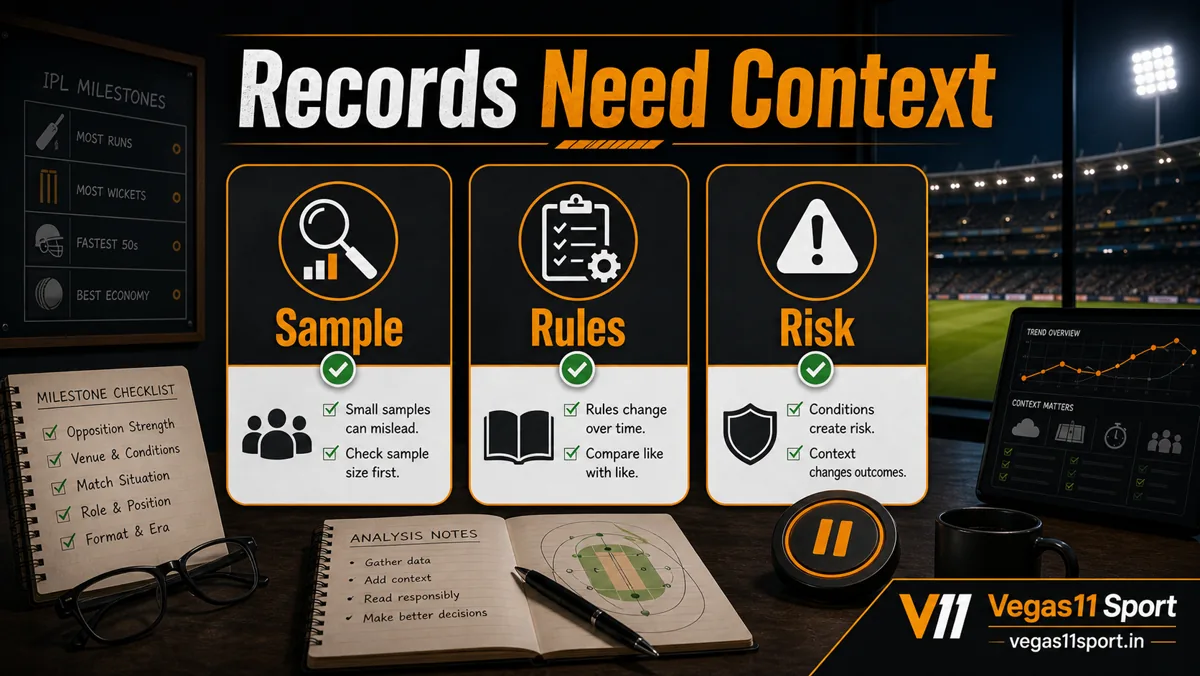
Records are memorable. That is their strength and their weakness. A round number or historic comparison can make a reader feel that the next match must follow the same storyline. Cricket does not owe the storyline anything. Team plans, opposition tactics, and conditions can interrupt the clean narrative quickly.
A useful milestone article therefore needs a second column: what could make this milestone less relevant today? The answer might be a different batting position, a tougher matchup, a slow surface, a shortened role, or a market that already reflects public attention.
A Personal View: Separate Achievement From Action
My personal rule is to enjoy milestones as cricket first and analyze them as market context second. The achievement can be real and still not be a reason to act. Keeping those two ideas separate makes the article more honest and the reader calmer.
For Vegas11 Sport readers, the stronger habit is to track how a milestone changes attention, not to assume it changes probability by itself. Attention can move conversation. It can also create overreaction. The context grid helps keep both possibilities visible.
A practical note-taking habit can help here. Write the milestone in one line, then write the reason it may not matter today in the next line. If the second line is blank, the reader has not finished the analysis. That small counterpoint keeps a record from becoming a one-way story.
This is especially important when a milestone is already popular before the match. Popular stories can be useful context, but they can also make the market feel more obvious than it is. The calmer question is whether the current role, venue, and rule set still support the same reading.
| Reader Scenario | Calmer Interpretation | Why It Helps |
|---|---|---|
| A batter is close to a landmark. | Check whether the team role supports that scoring path. | It avoids reading personal goals into team strategy. |
| A bowler has a strong record trend. | Check expected overs and opponent matchup. | It connects the record to usage. |
| A milestone market looks popular. | Read the market label and settlement rule first. | It prevents confusion between story and market scope. |
| A social post pushes urgency. | Pause and verify source, timing, and relevance. | It keeps the reader from acting on noise. |
FAQ
Do IPL player milestones affect betting trends?
They can affect public attention and market discussion, but they should not be used alone. Check role, venue, market rules, and session limits first.
What milestone data should readers check first?
Start with current role and match conditions. A milestone from one context may not apply cleanly to a different venue, batting position, or bowling phase.
Are milestone markets simple to read?
Not always. Read the exact market label, event scope, settlement rule, and timing. If the rule is unclear, skip the decision until it is clear.
Source and update note: This article was refreshed on June 5, 2026 using public IPL context from IPL, responsible-use guidance from NCPG, and safer-gambling guidance from GambleAware. Player roles, records, market labels, and platform terms can change. Check current information before acting.
Related Reading
Vegas11 Sport may include commercial references or affiliate links. Read the Affiliate Disclosure, Review Methodology, Responsible Gaming, and Corrections Policy pages before using betting-related information. Odds, account tools, market rules, promotion terms, and cricket news can change. Check live terms and current match information before you act.