
Updated June 24, 2026: IPL combo bets attract attention because one ticket can connect several cricket conditions, but the reader’s real job is to understand each leg before the ticket looks simple. This refresh keeps the same keyword and reader intent from the original post, but removes outcome-led storytelling and replaces it with a clearer IPL editorial task: what should a reader check before the match situation becomes an account decision?
My viewpoint for this article is the Combo Risk Ladder. It is a simple filter built for IPL readers who want to follow match news, compare betting markets, and stay calm when the game moves quickly. It does not predict the match result, and it does not turn betting into a certainty. It helps the reader slow the decision down enough to notice rules, timing, and limits.
Vegas11 Sport readers usually arrive with a cricket question first. They may be checking a toss update, a combo market, the final over, or a general strategy idea. The useful answer is not a louder promotional line. The useful answer is a process that separates current cricket information from pressure, habit, and unclear terms.
This guide is written for adults who already follow IPL betting information. Treat it as editorial context, not as a recommendation to place a bet. If the market, account rule, regional requirement, or personal limit is unclear, the responsible next step is to pause and check the current terms before doing anything else.
The Direct Answer: Review Every Leg Before You Join
The useful way to read an IPL combo is to break the ticket into individual legs, read each rule, then check how the conditions interact. A combo is not one idea. It is a chain of smaller ideas, and one unclear leg can make the whole ticket harder to understand.
Before joining any combo, the reader should know the number of legs, the market behind each leg, the settlement rule, and the personal limit. If a ticket needs several assumptions to make sense, it needs a slower review.
That first answer matters because IPL coverage can become noisy. A headline can focus on drama, a live score can feel urgent, and a market label can look simpler than its settlement rule. A reader who writes down the check before opening the market has a cleaner starting point than a reader who reacts to the screen.
| Reader Question | What To Check | Why It Matters | Pause Signal |
|---|---|---|---|
| How many legs are included? | Count each selection and write it separately. | More legs mean more conditions to understand. | The ticket is read as one simple headline. |
| Are the events connected? | Check whether one leg depends on another. | Connected conditions can change how the ticket should be read. | The reader assumes all legs are independent. |
| Are the rules clear? | Read settlement, void, delay, and abandoned-match notes. | Rules decide what happens after the match story changes. | Only the odds display is reviewed. |
| Is the limit already set? | Set the limit before the ticket is built. | The combined display can make the ticket feel smoother than it is. | The amount changes while adding legs. |
How The Combo Risk Ladder Works
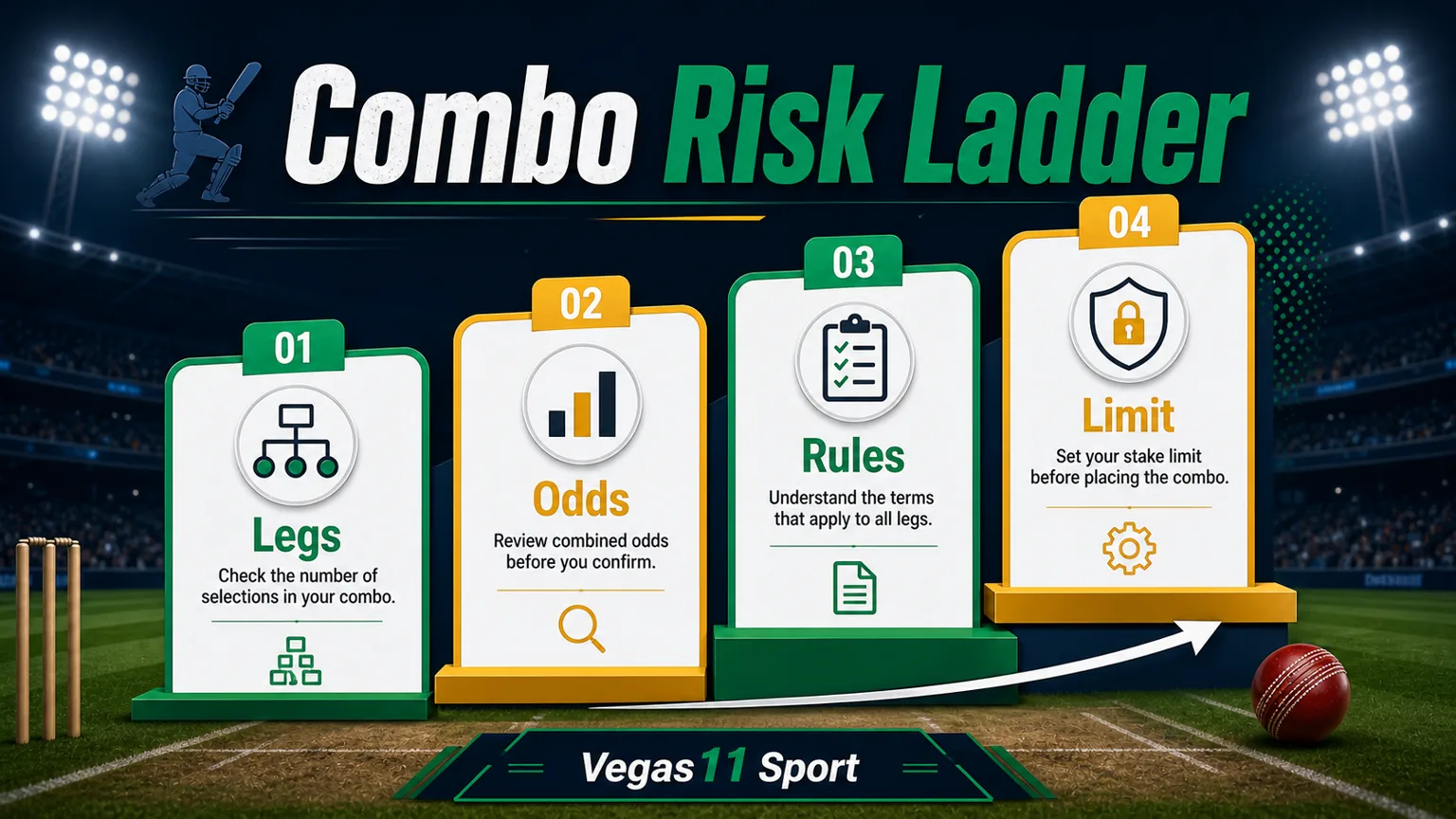
The Combo Risk Ladder has four steps: legs, odds, rules, and limit. The point is not to make a combo more exciting; it is to make every condition visible. Start with the first checkpoint and make it concrete. A checkpoint should be a fact the reader can name, not a mood. If the note says “the match feels open”, that is not enough. If the note says “the XI changed, the bowling role changed, and the rule says settlement depends on the official result”, the reader has something more useful to review.
The second checkpoint is the market condition. Many IPL betting mistakes begin when a reader understands the cricket but not the market wording. A market can use familiar cricket language while still having a specific settlement rule, timing condition, or void rule. Reading that rule is part of the article task, not a separate chore.
The third checkpoint is personal limit. This is not only about the amount. It is also about time, attention, and the point where the reader stops reading markets for the day. A clear limit keeps one intense over, one group chat, or one score update from turning into an improvised session.
| Framework Step | Reader Action | Clean Signal | Weak Signal |
|---|---|---|---|
| Legs | List every selection in plain English. | Each leg can be explained without shorthand. | One leg is vague or copied without review. |
| Odds | Read the combined display after reading each leg. | The reader knows what changed when a leg was added. | The combined number becomes the main reason. |
| Rules | Check settlement and void wording. | The reader knows what happens if the match changes. | Rules are skipped because the ticket looks familiar. |
| Limit | Lock the amount before confirming. | The amount fits the original plan. | The amount grows as the ticket becomes more complex. |
What This Changes From The Original Angle
The original combo article leaned on small-stake excitement and large-result language. The revised angle treats combo betting as a rules-and-conditions problem. The old angle made the story sound as if the exciting part was the result. For a responsible IPL news and guide page, the stronger angle is the decision quality before the result. That is why this rewrite keeps the topic but changes the centre of gravity.
A result story is easy to remember, but it can be hard to use responsibly. A process story is less dramatic, yet it gives the reader something practical. The reader can check whether the evidence is current, whether the rules are clear, whether the amount still fits the plan, and whether emotion is pushing the timing.
I would rather see a Vegas11 Sport reader skip a market they do not understand than enter it because an article made the moment sound exciting. That is the personal editorial view behind this batch: good IPL content should make the reader more selective, not more hurried.
A Practical IPL Match Checklist
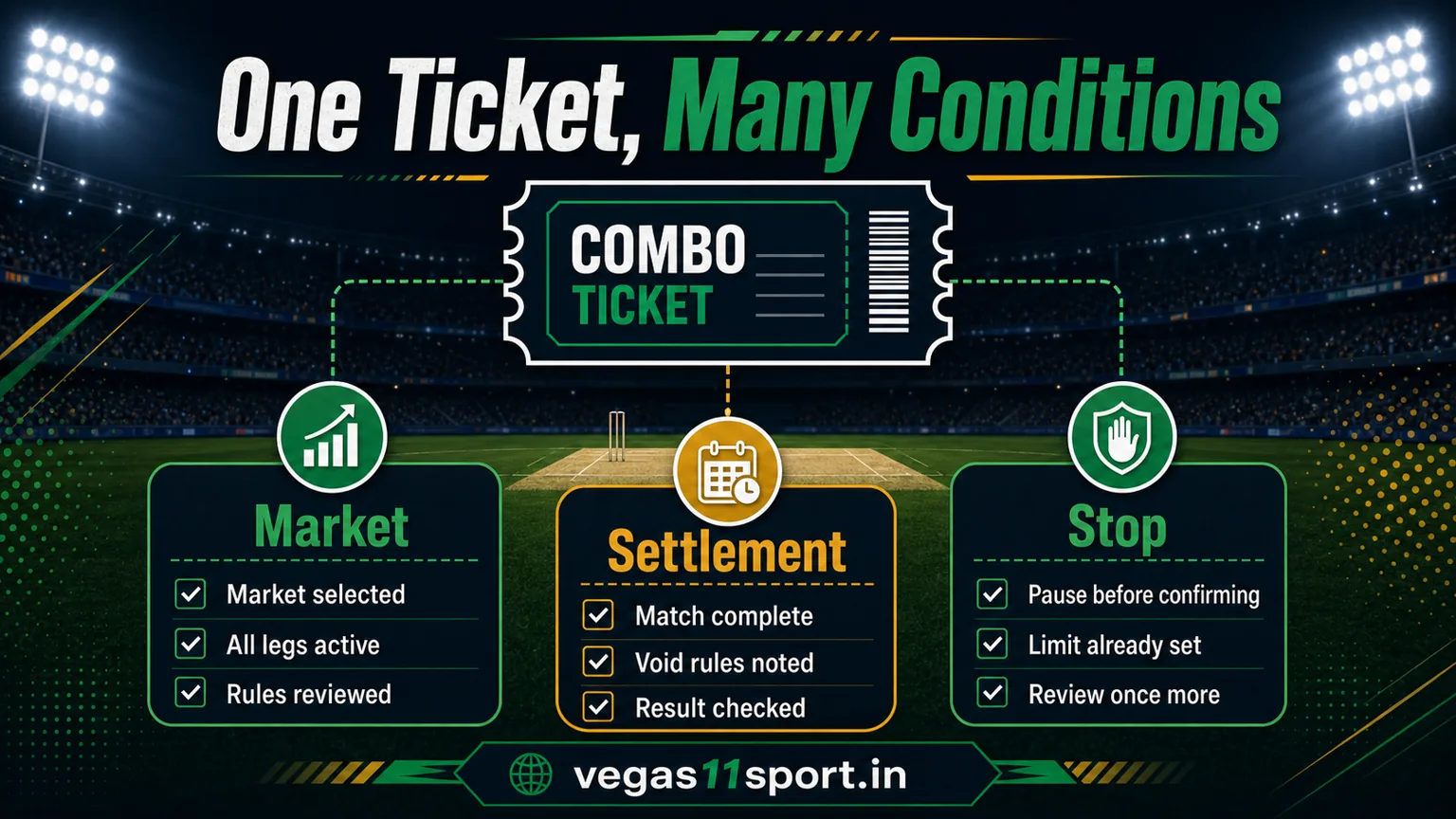
Use this checklist before the market becomes urgent. It works for pre-match reading and for live-match reading, but it is most useful when completed before the strongest emotion arrives. If the match has already become loud, take a short break and come back to the checklist when the next ball or next update is no longer controlling the decision.
- Write each combo leg on its own line before reading the combined ticket.
- Check whether any leg depends on toss, innings, player role, or official result wording.
- Read what happens if a match is delayed, shortened, abandoned, or changed.
- Compare the combined ticket with the original reason for each leg.
- Stop if the ticket is only attractive because the combined display feels dramatic.
The checklist should be written in plain English. Avoid shorthand that only makes sense in the moment. A clear note like “I am waiting for confirmed XI and the posted settlement rule” is easier to review later than a vague note like “looks good”. If the note cannot be explained after the match, it was probably not clear enough before the match.
| IPL Moment | Useful Reader Move | What To Avoid |
|---|---|---|
| Building the ticket | Add one leg at a time and review the reason. | Adding legs because the screen makes it easy. |
| Market comparison | Compare rules, not only displayed numbers. | Choosing the ticket that looks more dramatic. |
| Live update | Check whether any leg has become unclear. | Treating the old plan as current after conditions change. |
| Before confirmation | Read the final ticket aloud in plain English. | Confirming before every leg is understood. |
Source, Rules, And Responsible-Use Notes
For IPL context, use official match and tournament information from IPL where available. For personal risk and responsible-use context, review guidance from NCPG and GambleAware. Those sources do not decide a market for you; they remind the reader that cricket information, market rules, and personal limits are separate checks.
Account terms, odds display, settlement wording, and regional availability can change. This article does not verify live account eligibility for every reader. Check the current Vegas11 Sport terms, your local rules, and your own limit before using any betting-related information.
FAQ
What is the main risk in an IPL combo bet?
The main practical risk is misunderstanding one leg or one settlement condition. A combo can look like one ticket, but each leg still has its own rule and uncertainty.
Should readers add more legs to make a combo more interesting?
No. Add a leg only if the cricket reason and market rule are clear. More legs create more conditions to review.
What should be checked before confirming a combo?
Check the leg count, linked events, settlement terms, void rules, current match context, and personal limit before confirming.
Personal Editorial Takeaway
My personal rule for combo tickets is simple: if one leg cannot be explained calmly, the whole ticket should wait. The article is useful only if it makes the reader more patient with evidence and more willing to walk away from unclear conditions. That is the standard I would apply to this topic on Vegas11 Sport.
Source and update note: This article was refreshed on June 24, 2026 using public IPL context from IPL, responsible-use guidance from NCPG, and safer-gambling guidance from GambleAware. Cricket news, market wording, and account terms can change after publication. Recheck current information before acting.
Related Reading
- Better IPL Odds Through Data Tools
- IPL Futures Betting Guide
- Responsible IPL Play
- IPL Retention Watch
- IPL Combo Conditions Guide
Vegas11 Sport may include commercial references or affiliate links. Read the Affiliate Disclosure, Review Methodology, Responsible Gaming, and Corrections Policy pages before using betting-related information. Odds, account tools, market rules, promotion terms, and cricket news can change. Check live terms and current match information before you act.