
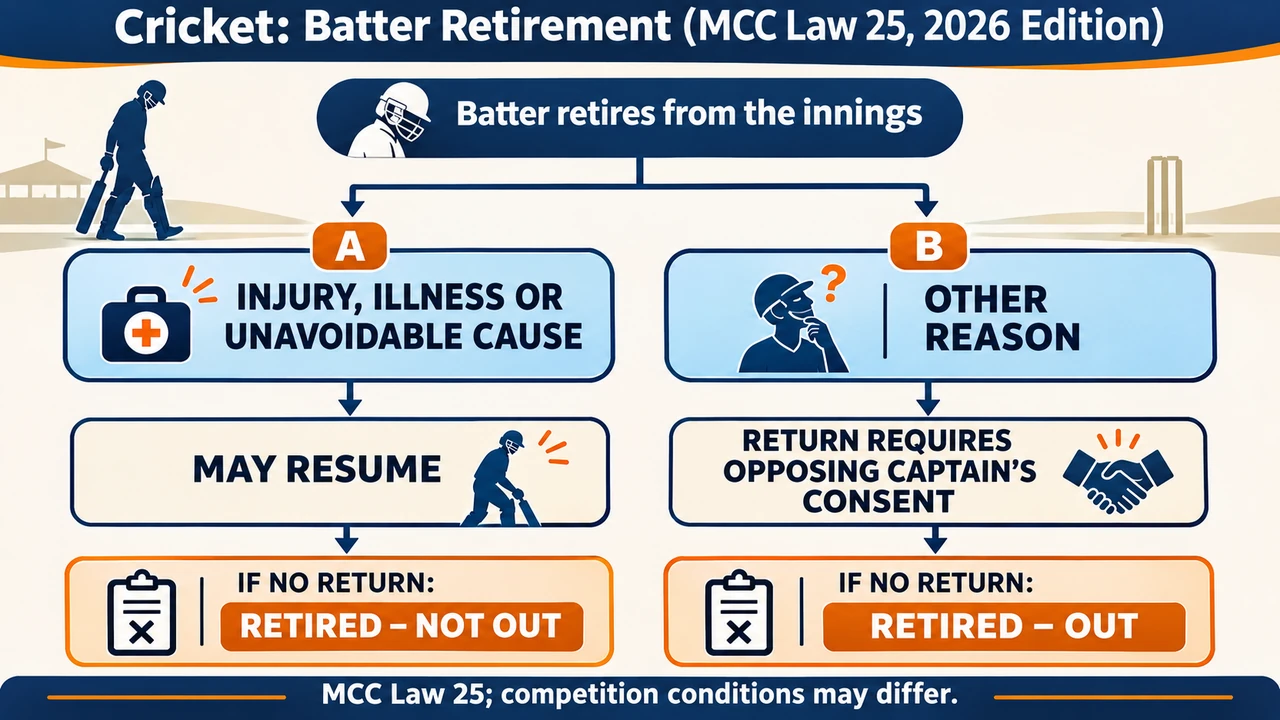
A batter who retires from an innings has not necessarily been dismissed. Under MCC Law 25.4, the reason for retirement affects whether the batter may resume and how an innings is recorded if they do not return.
“Retired hurt” is a familiar live scorecard description, but the final entry and return conditions depend on the facts and rules of the match. Check the relevant competition’s playing conditions as well as the live feed.
Injury, illness or another unavoidable cause
The MCC law says a batter who retires because of illness, injury or another unavoidable cause is entitled to resume their innings. If the batter does not resume for any reason, the law says the record is retired – not out.
That entitlement is not a guarantee that the batter will be fit or able to return before the team innings ends. It also does not tell a viewer the medical details. Follow the official match updates rather than guessing from the scorecard label alone.
Retirement for another reason
Under the cited MCC law, when the reason is outside that injury, illness or unavoidable-cause category, the batter may resume only with the opposing captain’s consent. If the innings is not resumed, the law says the batter is recorded retired – out.
This is the default Law 25 wording, not a promise that every competition uses the same return procedure. For example, the ICC Women’s Test Match Playing Conditions effective December 2025 say a batter retiring for another reason is recorded retired – out; their return provision is limited to the illness, injury or unavoidable-cause category. Identify the tournament, format and edition in force before applying a competition rule to a particular match.
When can a batter return?
Law 25 says a batter retires when the ball is dead and the umpires must be told the reason before allowing play to proceed. Where a retired batter resumes under the law’s applicable conditions, the return is at the fall of a wicket or the retirement of another batter.
A returning batter cannot simply enter during a delivery; under the MCC Law, a partner’s retirement or a wicket must provide the permitted return point. The match officials apply the relevant rules and playing conditions.
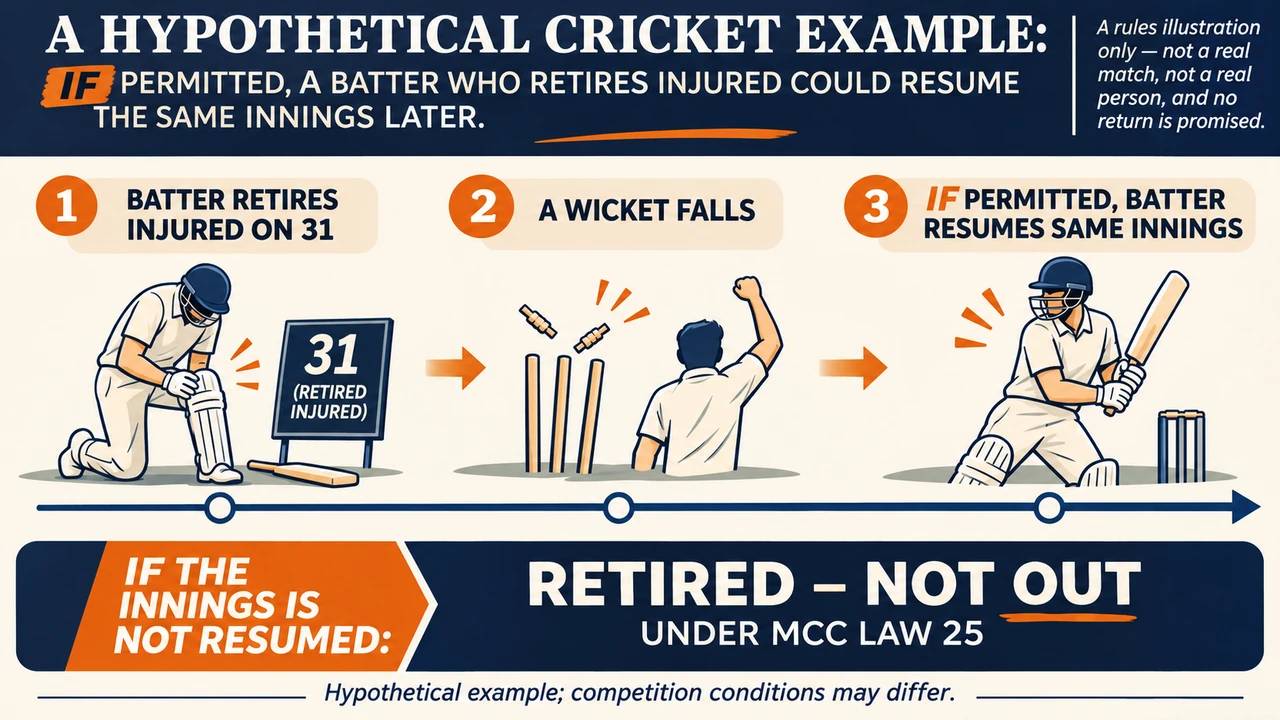
A simple scorecard example
Imagine a batter leaves on 31 because of an injury. Later, after a wicket falls, the batter returns and continues the same innings. The temporary departure did not itself establish a final dismissal.
If that batter never resumes, the cited MCC law says the innings is recorded retired – not out. A different retirement reason has a different rule. This example illustrates the law; it does not decide the facts of an actual match.
What to check during a live innings
First read the batter’s status and the match update. Then identify why the batter retired, whether the innings is still in progress, and which playing conditions govern the match. A live feed may be revised, so check the final official scorecard before treating a status as settled.
For the surrounding numbers, the site’s IPL scorecard guide explains runs, wickets and partnerships. The required run-rate guide addresses the remaining chase rather than retirement eligibility. For personal limits and support, see the responsible gaming page.
Retired Batter FAQ
Is retired hurt always a dismissal?
No. Under the cited MCC law, a batter retiring for injury, illness or another unavoidable cause is entitled to resume; if they do not, the record is retired – not out. Check the conditions and facts of the match.
Can a retired batter return immediately?
Where return is permitted under Law 25, it occurs at the fall of a wicket or another batter’s retirement. Competition-specific conditions may modify the rule.
Is retired out the same as run out?
No. They describe different ways an innings can be recorded or ended. A batter leaving for a reason outside the unavoidable-cause category is subject to the applicable retirement rule; do not infer a run-out incident.
Does every competition let the opposing captain approve a return?
No. MCC Law 25.4 permits a return with the opposing captain’s consent for a retirement outside the illness, injury or unavoidable-cause category. The cited ICC Women’s Test conditions differ; check the match’s applicable return provision.