
Blog
When Is a Cricket Ball Dead? The 2026 Finally Settled Rule
A ball coming to rest on the field does not, by that fact alone, establish that it is finally settled or dead. Under the 2026 MCC Laws, “finally settled” combines the ball’s physical state with a decision by the bowler’s-end umpire that it is no longer in play. A ball can also become dead in…
Run Out in Cricket: When Does Ball Control Matter?
For a run-out appeal, it matters how the wicket was broken. In an October 2026 clarification, MCC explained that the complete-control requirement applies when a fielder breaks the wicket with a hand or arm while holding the ball. A ball can also strike the wicket and dislodge a bail without first being held in that…
How a Wide Ball Is Judged When the Batter Moves
A ball passing outside a painted line is not, by itself, a complete explanation of a wide call. The umpire considers the delivery, the striker’s position and movement, and the playing conditions for the match. The 2026 MCC Laws set out the general rule. Competition conditions can add different instructions: the ICC separately described a…
Cricket No-Balls and Free Hits: What Happens Next?
The umpire calls a no-ball, the batter hits the next delivery high in the air, and a fielder catches it. Does the batter have to leave? In a match governed by the ICC men’s T20I conditions effective from October 2026, if the no-ball call stands and another delivery is bowled in the innings, it is…
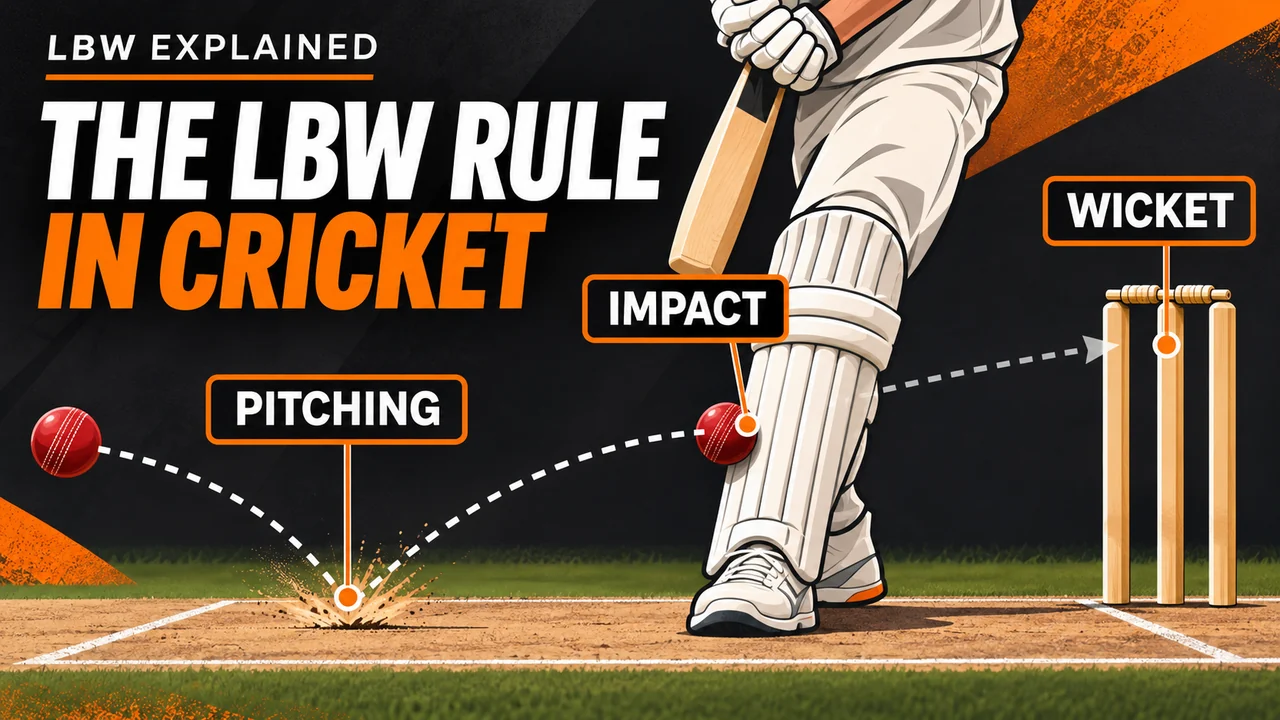
LBW in Cricket: Pitching, Impact and the Path to the Stumps
The replay says the ball would have hit the stumps, yet the batter stays in. That can be the right decision: an LBW appeal depends on more than the projected path. For example, if a ball first lands outside the batter’s leg stump, it cannot produce an LBW under MCC Law 36, even if it…
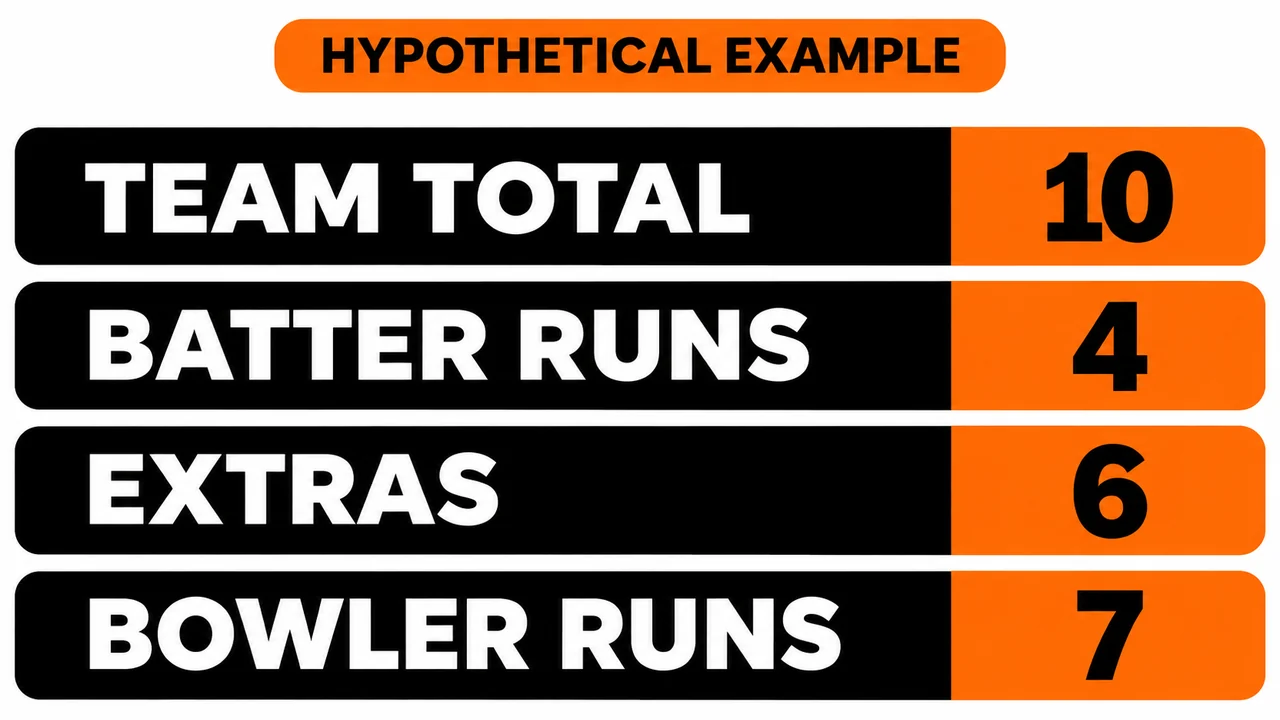
Cricket Extras Explained: Who Gets the Runs?
The scoreboard rises, but the batter’s individual score stays the same. That can happen when the batting side receives an extra. Wides, no-balls, byes and leg-byes all add to the team total, yet the bowler is not charged with every type in the same way. The practical question is not only “how many runs were…
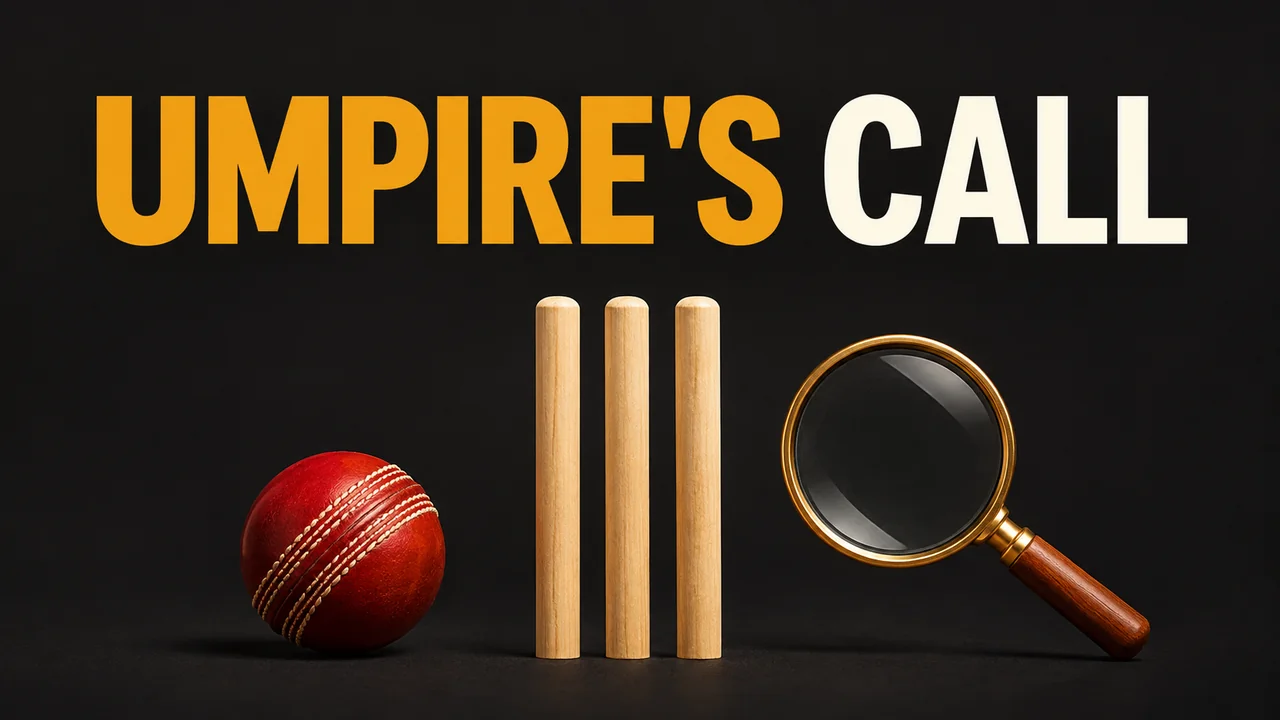
Umpire’s Call in DRS: Why the Original Decision Matters
An LBW review can end with the original decision standing even when the tracking display shows a marginal result. Under the ICC Men’s T20 World Cup 2026 DRS protocol, the relevant category is called Umpire’s Call. In the specific circumstances described by that protocol, the decision can stay unchanged without the review counting against the…
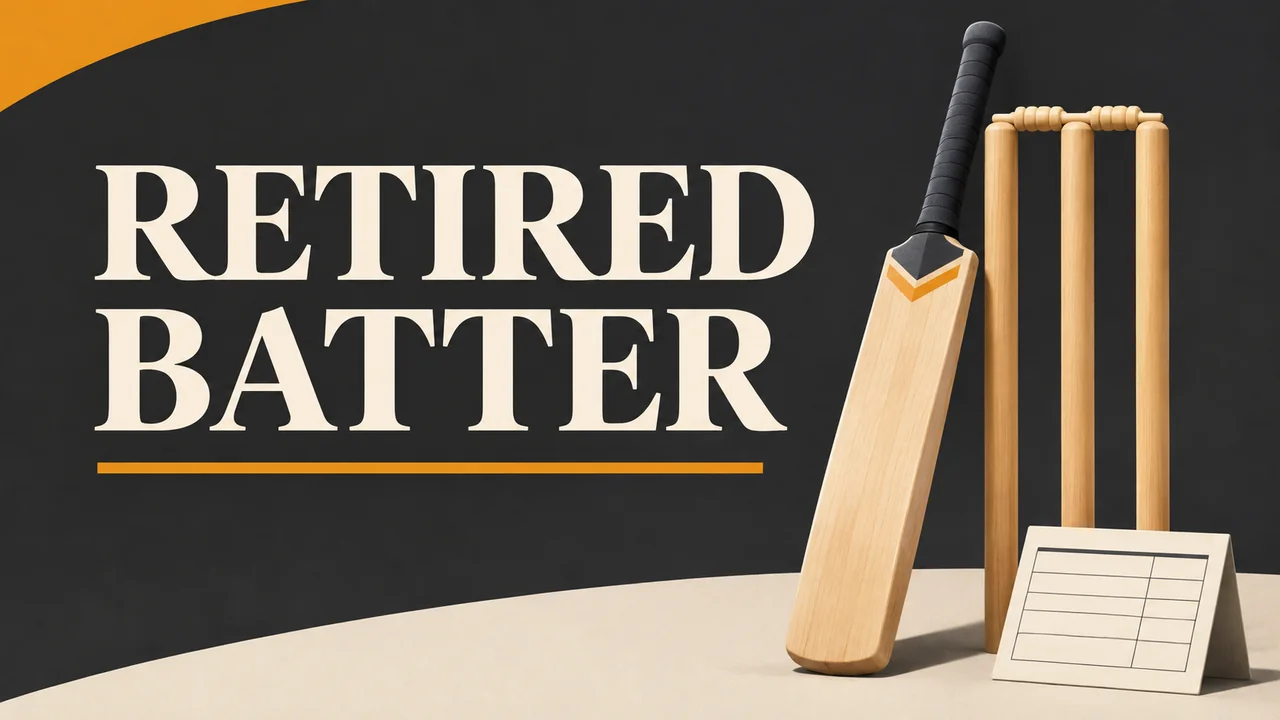
Retired Hurt or Retired Out? How to Read a Cricket Scorecard
A batter who retires from an innings has not necessarily been dismissed. Under MCC Law 25.4, the reason for retirement affects whether the batter may resume and how an innings is recorded if they do not return. “Retired hurt” is a familiar live scorecard description, but the final entry and return conditions depend on the…
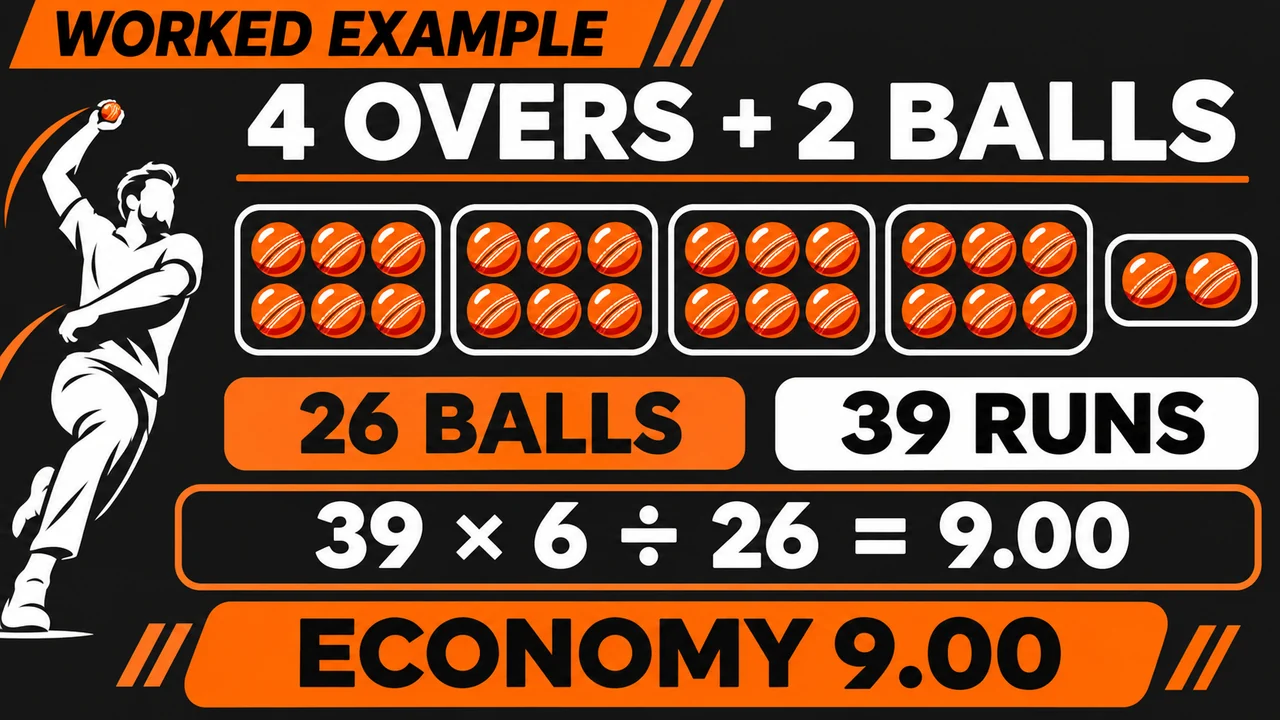
Cricket Bowling Economy: Calculate a Partial Over Correctly
A bowler’s figures say 4.2 overs, 39 runs conceded. Dividing 39 by 4.2 gives the wrong economy rate because the “.2” means two valid balls, not two tenths of an over. If each completed over contained six valid balls and the scorer uses ordinary notation, 4.2 represents 26 valid balls. The calculation is 39 ×…